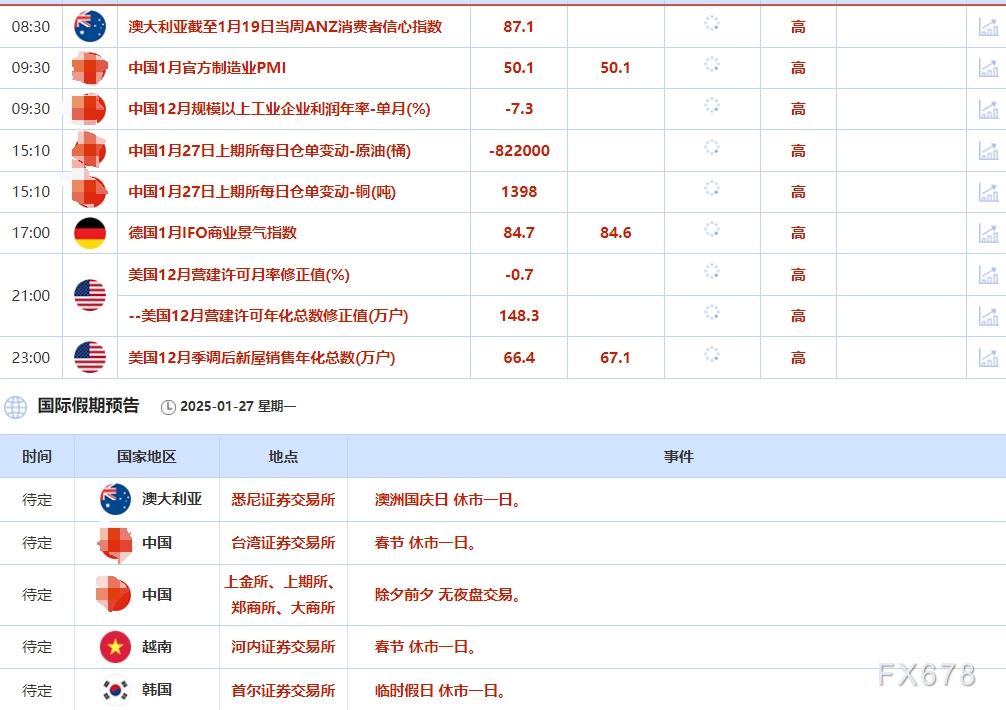
stock market
The US stock market closed lower last Friday as investors digested mixed economic data and financial reports and prepared for this week's economic data and Federal Reserve meeting. The technology sector caused the biggest drag, with super large cap stocks including artificial intelligence chip leader Nvidia reversing the significant gains made earlier last week. The housing market data is hotter than expected, and S&P's global survey shows that US business activity slowed to its lowest level in nine months in January as prices rose. However, the increase in recruitment reported by companies supports the idea of the Federal Reserve adopting a cautious attitude towards monetary policy this year. The final value of the University of Michigan's January Consumer Confidence Index dropped to 71.1, with an initial value of 73.2.
At the end of a relatively low data week, the latest data from CME FedWatch Tool shows that traders are betting that the Federal Reserve will keep borrowing costs unchanged at its meeting on January 28-29 and expect to cut interest rates for the first time in June.
This actually boils down to some mixed economic and financial news, "said Scott Helfstein, head of investment strategy at Global X
Investors are preparing for a series of key inflation and economic growth data next week, as well as the Federal Reserve meeting, while waiting for the latest news on the Trump administration's policies. He said, "It is expected that there will be major news in the coming week. The policy uncertainty of the new government's first week in office is lingering, and this uncertainty may last for several weeks
Investors are concerned that Trump's proposed tariffs may exacerbate inflationary pressures and slow down the pace of interest rate cuts by the Federal Reserve. He mentioned trade policy multiple times last week, but did not provide specific details of the plan.
The three major stock indexes have risen for the second consecutive week, with the S&P 500 index up 1.74%, the Nasdaq up 1.65%, and the Dow Jones up 2.15%. Among the 11 industry sectors in the S&P 500 index, six sectors rose, with the communication services sector rising 1.09%, the largest increase, followed closely by the utilities sector, rising 1.07%.
The largest increase in the utility sector was NextEra Energy Inc, which rose about 5.2% and was also the largest individual stock in the S&P 500 index on the day. The S&P 500 index hit its highest closing level since early December on Thursday, following Trump's call for lower tax rates, oil prices, and interest rates at the World Economic Forum in Davos, Switzerland. This was his first international conference attendance during his term. Last Wednesday, the strong rise in technology stocks provided support for the market. But last Friday, the technology sector performed the weakest, with chip manufacturer Texas Instruments plummeting 7.2% as it struggles to deal with inventory backlog in its major automotive and industrial markets. The company's expected first quarter profit was lower than market expectations.
The biggest drag on the S&P 500 index was NVIDIA, which fell 3.1%. Other large cap stocks that have lost include Microsoft, which fell 0.6%, and Tesla, which fell 1.4%. American Express reported a 12% increase in fourth quarter profits, but its stock price fell by 1.4%, dragging down the blue chip Dow Jones Industrial Average.
King City
Gold prices climbed over 1% last Friday, approaching the historical high set in October. US President Trump's push for interest rate cuts and tariff uncertainty led to a weakening of the US dollar, causing gold prices to rise for the fourth consecutive week. Spot gold was reported at $2772.79 per ounce, up 0.7%. Last week, gold prices rose by 2.7%, with only a difference of $17.3 from the historical high of $2790.15 set on October 31st. US gold futures closed at $2778.90 per ounce, up 0.5%.
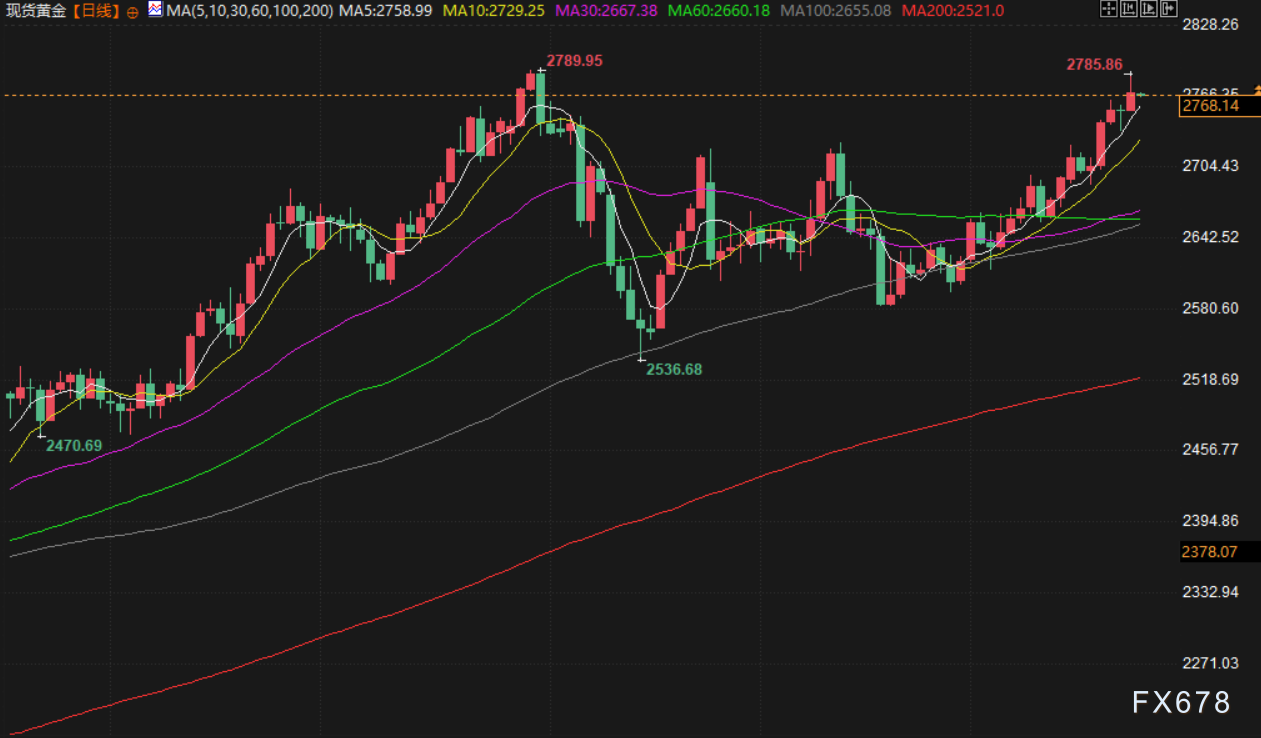
Bart Melek, head of commodity strategy at TD Securities, said, "One of the factors seems certain to be the decline of the US dollar, and some of the biggest drivers of the dollar's decline are related to President Trump's discussion of tariffs
At last Thursday's World Economic Forum, Trump called for an immediate interest rate cut. The US dollar has hit a new low in over a month, which has led to a decrease in the price of gold for foreign buyers. Traders expect the Federal Reserve to keep interest rates unchanged at this week's meeting.
Spot silver was reported at $30.67 per ounce, up 0.8%; Platinum was reported at $948, up 0.6%, while palladium rose 0.1% to $992.75, reaching a new high since November 25th. All precious metals are expected to record weekly gains.
Oil market
Oil prices closed slightly higher last Friday, but recorded a weekly decline, ending four weeks of continuous gains. Earlier, US President Trump announced a comprehensive plan to increase domestic crude oil production and called on OPEC to take action to lower crude oil prices.
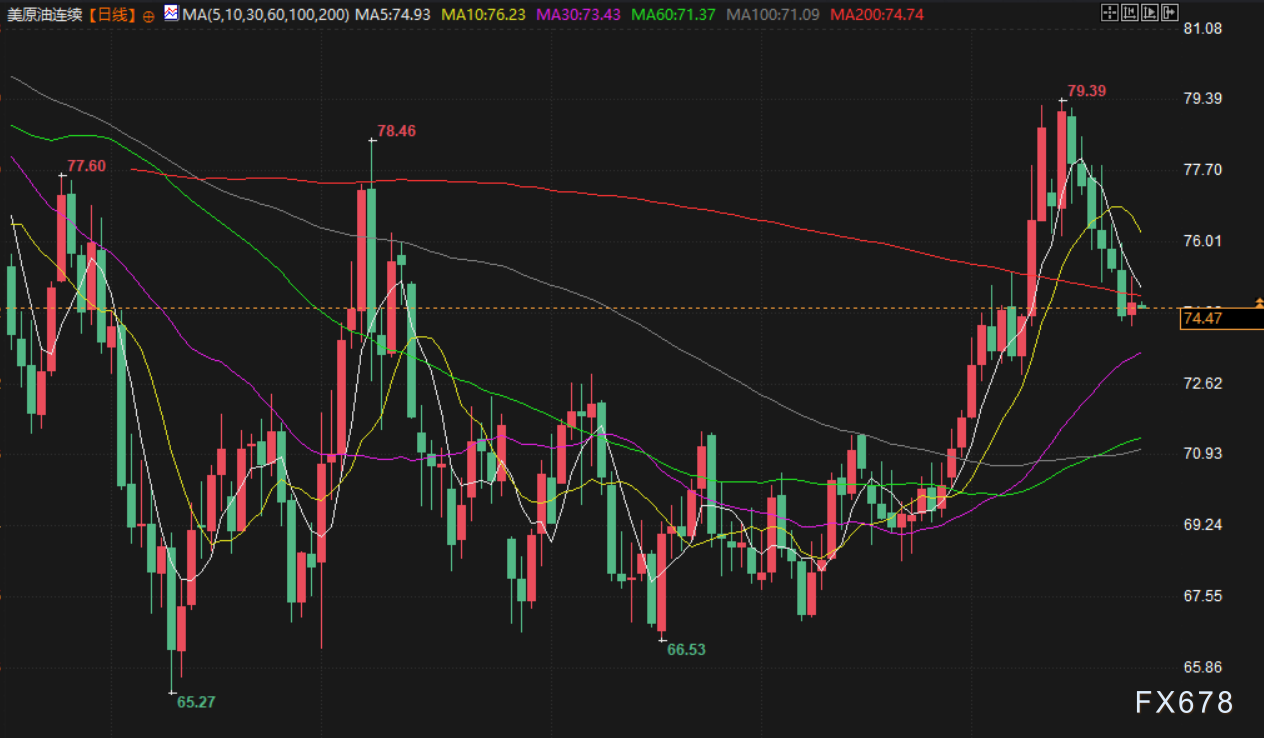
Brent crude oil futures closed up 0.27% to $78.50 per barrel. The settlement price of US crude oil rose by 0.05% to $74.66. Last week, Brent crude oil fell by 2.8%, while US crude oil fell by 4.1%.
Last Friday, Trump once again called on the Organization of the Petroleum Exporting Countries (OPEC) to lower oil prices in order to damage the finances of oil-rich Russia and help end the Ukraine war. When Trump landed in North Carolina to inspect the storm damage, he said, "One way to quickly stop the war is for OPEC to stop making so much money and lower oil prices... The war will stop soon
StoneX analyst Alex Hodes said in a report last Friday that the threat of severe US sanctions against Russia and Iran, the two major oil producing countries, could undermine Trump's goal of reducing energy costs. Last Thursday, Trump stated at the World Economic Forum that he would demand OPEC and its de facto leader Saudi Arabia to lower crude oil prices.
Trump vowed last Wednesday to impose tariffs on the European Union and 25% tariffs on Canada and Mexico. The US Energy Information Administration (EIA) reported that US crude oil inventories hit their lowest level since March 2022 last week.
currencies
The US dollar fell last Friday and is expected to have its worst weekly performance in over a year, with expectations that the tariffs implemented by US President Trump will be lower than previously feared.
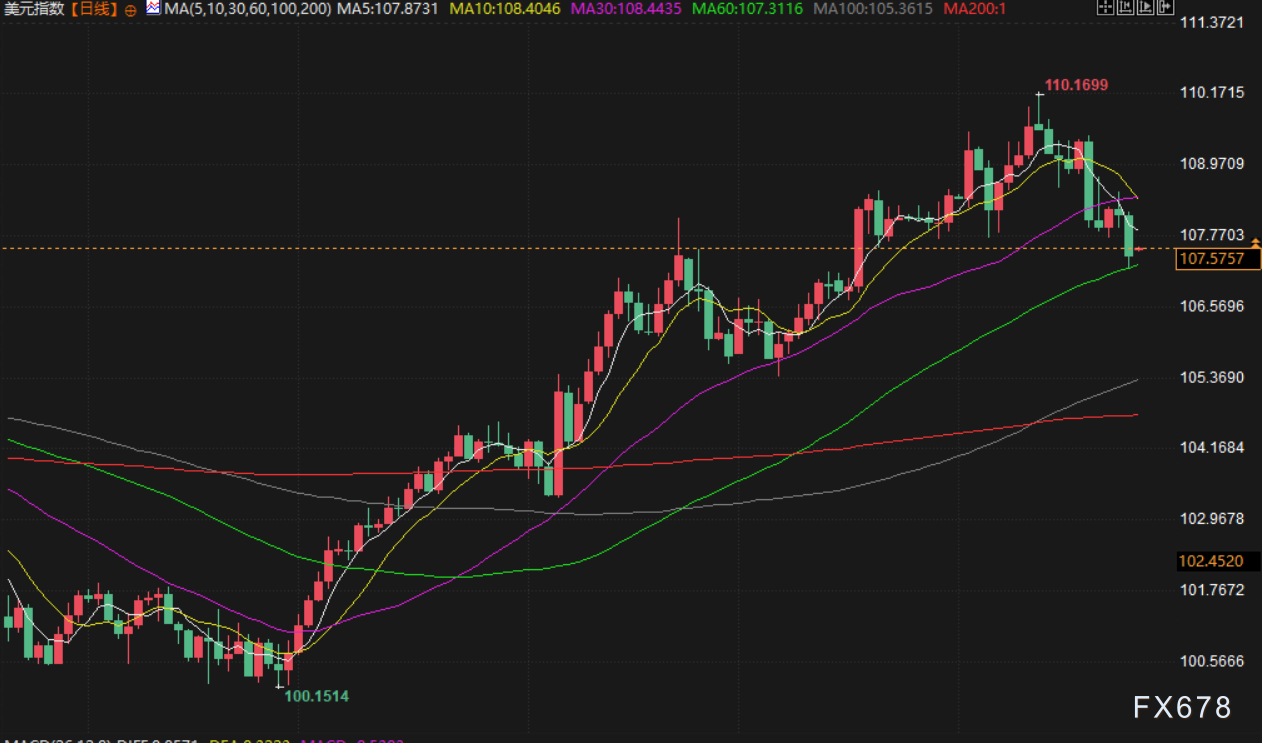
The prospect of imposing high tariffs on goods from Canada, Mexico, and the eurozone has raised concerns about a resurgence of inflation, which has led to a rise in US Treasury yields and the US dollar in recent months. However, last week there was a partial reversal in this trend, with traders betting that tariffs may not be as large-scale or widespread as previously feared. Adam Button, Chief Currency Analyst at ForexLive, said: People are becoming increasingly skeptical that tariffs will come.
The US dollar index fell 0.64% at the end of the session, closing at 107.45. On January 13th, the index reached its highest level since November 2022 at 110.17. Last week, the US dollar index was expected to decline by 1.79%, marking the largest weekly drop since November 2023. Trump also stated on Thursday that he hopes the Federal Reserve can cut interest rates, and the Fed will hold a meeting this week.
It is expected that the Federal Reserve will keep interest rates unchanged at the end of its two-day meeting on Wednesday, but investors will be watching for any clues that may lead to a rate cut in March, provided that inflation continues to slow down and approaches the 2% target. Last Friday's data showed that as price pressure rose, US business activity slowed to its lowest level in nine months in January, but US existing home sales rose to a 10 month high in December. Consumer confidence in the United States weakened in January for the first time in six months, as consumers are concerned about the labor market and the possibility of rising prices if the Trump administration continues to push forward plans to impose tariffs on imported goods.
Marc Chandler, Chief Market Strategist at Bannockburn Global Forex, said that part of the reason for last week's correction in the US dollar may have been technical, as the dollar has risen 10% since the end of September. He said that many good news from the United States has been digested, and if the Federal Reserve maintains interest rate stability while the European Central Bank, the Bank of Canada, and the Swedish central bank all cut interest rates, the strength of the US dollar may be tested next week.
The euro rose 0.76% against the US dollar to $1.0494. The euro is expected to achieve a weekly increase of 2.18%, which will be the best weekly performance since July 2023. A survey shows that business activity in the eurozone has moderately resumed growth at the beginning of the new year, with stable service sector activity in January and some relief from the long-term downturn in manufacturing, which has boosted the euro.
The Japanese yen rose slightly in volatile trading after the Bank of Japan raised interest rates to the highest level since the 2008 global financial crisis and raised its inflation forecast.
Bank of Japan Governor Kazuo Ueda stated that as wages and prices continue to rise, the central bank will continue to raise interest rates, but did not provide any clues on the timing and pace of future rate hikes. The US dollar fell 0.11% to 155.88 yen at the end of trading in New York. The pound rose 1.04% against the US dollar, to $1.2479.
international news
Trump takes retaliatory measures against Colombia for refusing to accept deportation of immigrant flights
On January 26th local time, US President Trump announced that he would impose an emergency 25% tariff on all goods entering the United States from Colombia, in response to Colombia's refusal to accept deportation flights for illegal immigrants. Within a week, the 25% tariff would increase to 50%; Implement a travel ban and immediately revoke visas for Colombian government officials, as well as all allies and supporters; Implement visa sanctions on all party members, family members, and supporters of the Colombian government; For national security reasons, strengthen customs and border protection inspections for all Colombian citizens and goods; Fully implement the International Emergency Economic Powers Act (IEEPA) and impose fiscal, banking, and financial sanctions. (CCTV)
Trump hopes Jordan and Egypt will provide housing for Palestinian refugees
On January 25th local time, according to CNN, US President Trump said he discussed a potential plan with the King of Jordan to build housing and relocate over one million Palestinians to other countries. Trump stated that during his phone call with King Abdullah II of Jordan on that day, he requested that more Palestinians be allowed to enter Jordan. He expressed the hope that Jordan and Egypt can provide housing for Palestinian refugees. He will have a phone call with Egyptian President Sisi on the 26th local time to discuss this matter. Trump said that Gaza is like a 'demolition site', and he would rather cooperate with some Arab countries to build houses in different locations, so that Palestinian refugees may be able to live a peaceful life. Trump added that these homes "could be temporary" or "could be long-term". (CCTV)
Trump: may consider rejoining the World Health Organization
According to reports, US President Trump said on the 25th that he may consider rejoining the World Health Organization. It is reported that Trump said at a rally in Las Vegas: "Maybe we will consider doing this again, I don't know. Maybe we will. They will have to clean up the mess." Trump immediately ordered the United States to withdraw from the WHO after taking office, saying that the World Health Organization had mishandled the COVID-19 epidemic and other international health crises. Currently, the United States is scheduled to withdraw from the World Health Organization on January 22, 2026. The United States is the largest financial supporter of the World Health Organization to date, contributing approximately 18% of the total funding.
The average price of newly built apartments in Tokyo's 23rd district has exceeded 100 million yen for two consecutive years
According to reports, data released by the Japan Institute of Real Estate Economics on the 23rd showed that the average price per newly built apartment in Tokyo's 23 wards in 2024 decreased by 2.6% from the previous year to 111.81 million yen (approximately 5.22 million yuan). Due to the base effect of selling high priced properties in the previous year, the average price slightly decreased in 2024, but exceeded 100 million yen for two consecutive years. Against the backdrop of soaring building material prices, apartment prices remain high.
Trump talks about first foreign visit: could be Saudi Arabia, could also be UK
According to CNN, US President Trump was interviewed on Saturday (25th) local time aboard the US presidential plane Air Force One, during which he discussed topics such as his meeting with California Governor Newson and a possible first overseas visit. CNN reported that when it comes to his first foreign visit during his second term, Trump said on the 25th that it could be Saudi Arabia or the United Kingdom. It could be Saudi Arabia. It could be the UK. Traditionally, it's the UK. But last time, I went to Saudi Arabia because they agreed to buy $450 billion worth of American goods. If that proposal is appropriate, I will do it again. "Trump said on Air Force One that day that he planned to have a conversation with British Prime Minister Stammer" in the next 24 hours.
Department of Government Efficiency (DOGE): $420 million budget cut
The efficiency department of Musk's government has released its first weekly report, stating that after 80 hours of establishment, it has cut a budget of $420 million and cancelled two leases. The main targets of the initial reduction are diversified departments and unmanned housing leases.
Domestic news
DeepSeek has completely exploded! Excellent performance and extremely low cost in the industry: its success may weaken market expectations for Nvidia AI chip demand
This weekend, both the technology and investment industries are suddenly discussing DeepSeek. This week, the Chinese artificial intelligence company DeepSeek released its R1 model, making Silicon Valley nervous. In third-party benchmark tests, its performance outperforms leading American artificial intelligence companies such as OpenAI, Meta, and Anthropic. From its performance perspective, DeepSeek is indeed excellent. According to personal testing by reporters, in terms of literary literacy and writing organization ability, it is already a phenomenon that can instantly kill a group of writers. A sense of professional crisis arises spontaneously. From its ability to read and summarize, as well as its ability to process mathematical logic, it can also be considered outstanding. The key is that the cost advantage of this large model is extremely obvious. Therefore, the market also attributed Nvidia's sharp decline on Friday to the popularity of DeepSeek. The market believes that the success of DeepSeek R1 may have weakened expectations for demand for Nvidia AI chips. Because DeepSeek seems to have built a groundbreaking artificial intelligence model at an extremely low cost and without the need for cutting-edge chips. This raises questions about the actual utility of hundreds of billions of dollars in capital expenditures invested in the chip industry.
Ministry of Commerce: Foreign non-financial direct investment of 143.85 billion US dollars in 2024, an increase of 10.5% compared to the previous year
The person in charge of the Cooperation Department of the Ministry of Commerce introduced the operation of foreign investment cooperation in 2024. In 2024, China's foreign investment cooperation achieved stable development. The main characteristics are as follows: firstly, steady growth in outward investment. In 2024, foreign non-financial direct investment reached 143.85 billion US dollars, an increase of 10.5% compared to the previous year. Investment in the ASEAN region has grown rapidly, with a year-on-year increase of 12.6%, mainly directed towards countries such as Singapore, Indonesia, and Thailand. From an industry perspective, the main industries are leasing and business services, manufacturing, and wholesale and retail.
The implementation of the new real estate tax policy resulted in an additional 11.69 billion yuan in tax reductions and exemptions in the first month
The latest data released by the State Administration of Taxation shows that from December 1, 2024, new tax reduction policies such as preferential deed tax for real estate transactions will be implemented nationwide. In the first month of policy implementation, the tax reduction dividends will continue to be released, promoting the stable and healthy development of the real estate market. Data shows that in the first month of the implementation of the new real estate tax policy, there were 11.69 billion yuan of new tax exemptions for homebuyers nationwide. (CCTV)