**********On Monday (February 3rd Beijing time), spot gold opened with a short-term rise of $3 and traded near 2801. Due to the implementation of Trump's tariff policy over the weekend, concerns about global economic growth and inflationary pressures have intensified, prompting investors to rush to buy safe haven assets; US crude oil rose nearly 3%, trading around $74.50 per barrel. In addition to the impact of tariff policies, the market is still waiting for the OPEC+meeting. According to OPEC+representatives, the alliance is unlikely to change its existing plan to gradually increase production.

The Dow Jones Industrial Average fell 0.75% to 44544.66 points last Friday; The S&P 500 index fell 0.50% to 6040.53 points; The Nasdaq index fell 0.28% to 19627.44 points.
Key focus for the day: PMI data from multiple countries including the Eurozone, France, Germany, and the United States. The Bank of Japan has released a summary of the opinions of the members of the January monetary policy meeting, and the Ministerial Supervisory Committee of OPEC and non OPEC oil producing countries has held a meeting.
stock market
The US stock market closed lower last Friday, as the three major stock indices turned from rising to falling after the White House announced that US President Trump would impose a 25% tariff on imported goods from Canada and Mexico on Saturday.
After Trump repeatedly warned to use this measure, investors have been preparing for further tariff news. The uncertainty of tariff impact makes the economic and inflation prospects uncertain.
Rick Meckler, a partner at Cherry Lane Investments in New Vernon, New Jersey, a family investment office, said, "I thought the market would fall even more, and it's not just about the statement itself. I think tariffs may have an impact on some industries. It's about possible retaliatory actions.
In addition, a large number of American companies released quarterly performance reports last week. Apple closed down 0.7%. The stock briefly rose during the trading session. In the financial report released on Thursday, company executives made optimistic comments, suggesting that the company expects the decline in iPhone sales to change with the launch of artificial intelligence features.
Energy stocks led the decline of various sectors of the S&P 500 index last Friday, with Chevron falling 4.6% after its fourth quarter financial report was lower than expected; ExxonMobil fell 2.5% after its quarterly financial report was also lower than expected.
In January, all three major indexes rose, with the Dow Jones Industrial Average rising 4.7%, the S&P 500 index rising 2.7%, and the Nasdaq index rising 1.6%. Last week, the Dow Jones Industrial Average rose 0.3%, but the S&P 500 index fell 1%, and the Nasdaq index fell 1.6%. Last Monday, technology stocks were sold off after DeepSeek announced its breakthrough in low-cost artificial intelligence models. At the beginning of last Friday's trading session, economic data reinforced expectations that the Federal Reserve would maintain interest rates unchanged for a longer period of time. The report shows that US consumer spending was strong in December, with a moderate increase in inflation rate.
Clearly, it was entirely reasonable for the Federal Reserve to remain inactive last week, and it was also reasonable for (Federal Reserve Chairman) Powell to say they are not in a hurry to cut interest rates, "said Scott Wren, Senior Global Market Strategist at Wells Fargo Investment Research Institute in St. Louis, Missouri
The Federal Reserve kept interest rates unchanged in last Wednesday's policy statement, and Powell stated that the Fed hopes to see further progress in combating inflation before cutting interest rates.
After the closing, Trump stated that he expects his administration to impose tariffs on oil and gas around February 18th. But he did not specify the specific countries to which the tariffs would apply, nor did he provide more details about the plan.
King City
Gold prices broke through the $2800 mark for the first time last Friday, as US President Trump threatened tariffs, intensifying market concerns about global economic growth and inflationary pressures, prompting investors to rush to buy safe haven assets.
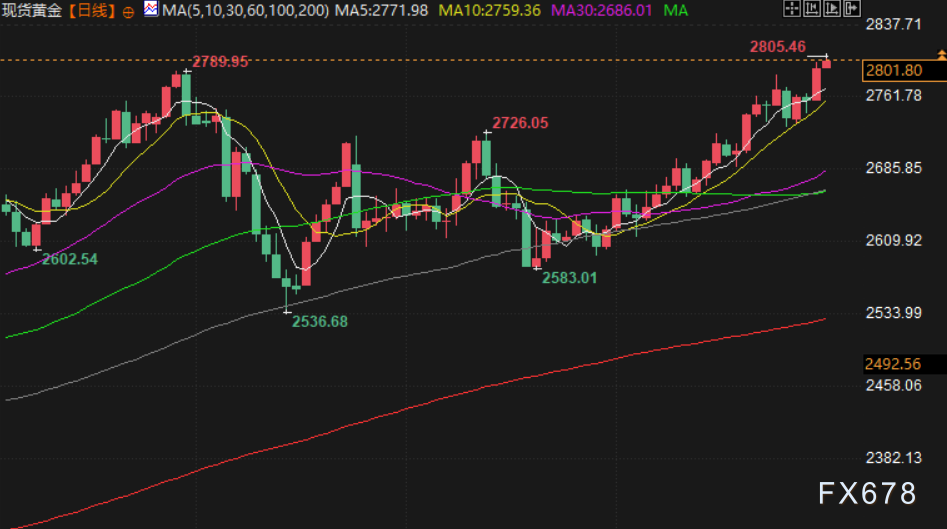
Spot gold rose 0.3% to $2801.29 per ounce, hitting a record high of $2817.23 during trading. US gold futures closed 0.4% lower at $2835 per ounce, up from spot gold.
Bob Haberkorn, Senior Market Strategist at RJO Futures, said, "There is a lot of uncertainty now, and the market is also adopting a wait-and-see attitude towards tariff issues on the geopolitical stage." Gold is the preferred asset during times of economic and geopolitical turbulence, and is expected to achieve its best monthly performance since March 2024, rising nearly 7% so far in January. Gold has repeatedly hit new highs last year.
Spot silver fell 0.8% to $31.42 per ounce after hitting a more than month high on Thursday. In a report, TD Securities said: 'We expect this strong trend in (silver) to attract the interest of independent traders, as trading activity in this group has remained almost unchanged as of last week, while gold has hit a historic high and the gold to silver ratio remains high.'.
Platinum rose 1% to $975.80 per ounce; Palladium rose 2.2% to $1011 per ounce, with all three metals recording monthly gains.
Oil market
Oil prices closed lower last Friday and also fell on the weekly chart, as investors waited for the implementation of the 25% tariff imposed by the United States on imported goods from Canada and Mexico.
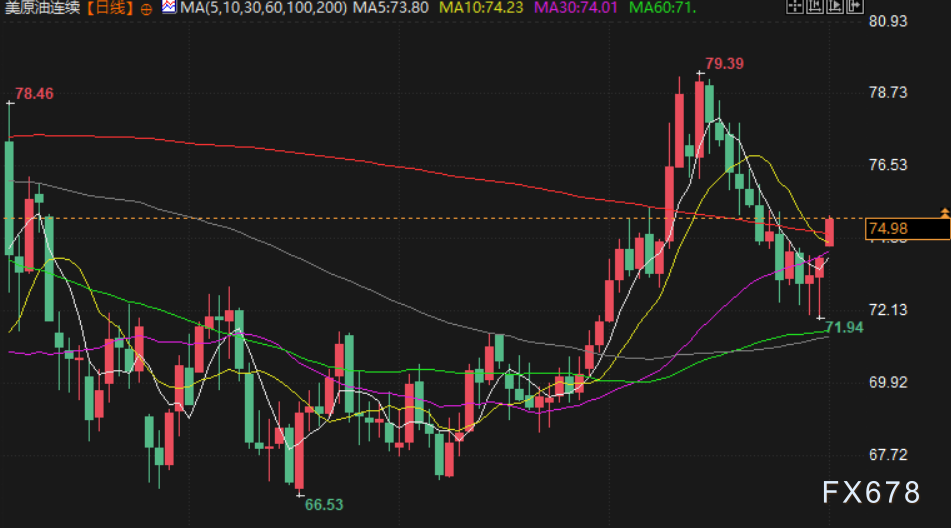
The March Brent crude oil futures, which expired last Friday, fell 11 cents to settle at $76.76 per barrel. The next month's futures, which are more actively traded, fell 31 cents to $75.58 per barrel. US crude oil futures closed down 0.3% at $72.53.
Last week, Brent crude oil and US crude oil fell by 2.1% and 2.9% respectively, marking the second consecutive week of decline. Reuters reported earlier, citing three sources familiar with the tariff review, that Trump will announce new tariffs on goods imported from Canada and Mexico on Saturday, but will take effect on March 1, and the measures will include a limited procedure to allow specific exemptions for certain imported goods.
Dennis Kissler, Senior Vice President of Trading at BOK Financial, stated that traders are waiting for the outcome of Trump's tariff threat as crude oil futures continue to fluctuate. He added that many refineries in the Midwest of the United States use Canadian crude oil, and reduced flow may support fuel prices.
The market is still waiting for the OPEC+meeting scheduled for Monday. OPEC+representatives told Reuters that the alliance is unlikely to change its existing plan to gradually increase production, despite Trump urging OPEC and its de facto leader Saudi Arabia to lower oil prices.
currencies
The US dollar rose against major currencies last Friday, the Canadian dollar softened, and the Mexican peso rose after the White House reiterated that President Trump would announce tariffs on Saturday.
On February 1st local time, the US government announced a 25% tariff on imported goods from Canada and Mexico. On the same day, US President Trump signed a tariff order imposing an additional 25% tariff on imported products from Canada and Mexico, and a 10% tariff on energy resources from Canada. The tariffs are tentatively scheduled to take effect on the 4th. The White House has stated that if there is retaliation against US tariffs, the US may increase the intensity of tariffs.
Earlier last Friday, data from the US Department of Commerce showed that the Personal Consumption Expenditures (PCE) price index rose 0.3% month on month in December, the largest increase since April last year, amid a significant increase in consumer spending. This suggests that the Federal Reserve may not be in a hurry to cut interest rates again.
Marvin Loh, Senior Global Market Strategist at State Street, said, "To a large extent, tariffs and the government have driven this trend of excessive strength of the US dollar; one of the biggest challenges is that if you want to propose a theory that there is a Trump trade, then the strengthening of the US dollar has always been a self-sustaining trade
Loh stated that US dollar trading is currently one of the trades with the heaviest positions. It does require a catalyst to continue its upward movement. But the tariff threats and/or actions we will see over the weekend are the driving factors for this topic now.
The US dollar rose 0.12% against the Canadian dollar, rebounding from a slight decline reported by Reuters. The US dollar against the Canadian dollar remains near a five-year high of 1.451 Canadian dollars, with a weekly increase of nearly 1.1%. The Mexican peso rose 0.17% against the US dollar to 20.728, but hit its worst weekly performance since October.
The US dollar rose 0.54% against the Japanese yen to 155.13 yen, with the weekly line rising for three consecutive weeks. The US dollar rose 0.1% against the Swiss franc to 0.9016 Swiss francs, marking a cumulative increase of 0.5% last week and ending two consecutive weeks of decline.
The euro fell 0.3% against the US dollar to $1.0367, with a weekly decline of 1%, the largest decline since December 30th. In January, it rose by 0.23%, the largest increase since September last year.
Bank of Japan Governor Kazuo Ueda stated that the central bank must maintain a loose monetary policy to ensure that core inflation gradually accelerates towards the 2% target. Last Friday's data showed that Tokyo's annual core inflation rate reached 2.5%, the highest in nearly a year.
The European Central Bank lowered interest rates on Thursday, leaving room for policymakers to cut rates again in March as concerns about weak economic growth outweighed concerns about persistent inflation.
The Federal Reserve kept interest rates unchanged this week, and Chairman Powell stated that he would not be in a hurry to cut rates again, but he also hinted that interest rates were "significantly" above neutral levels, and the Fed still had room to cut rates.
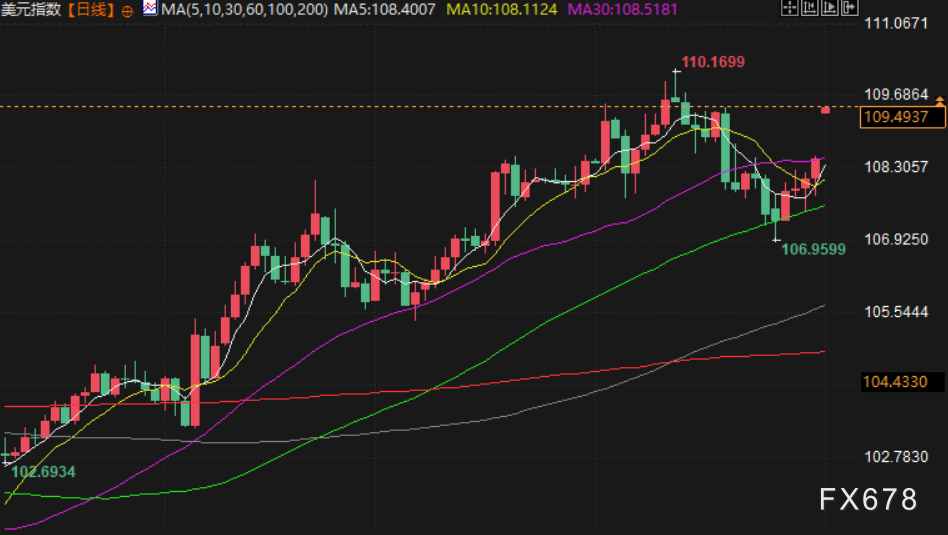
The US dollar index rose 0.31% to 108.42, up 0.93% last week, ending two consecutive weeks of decline.
John Velis, a forex and macro strategist at New York Community Bank (NYCB), said, "We originally expected some volatility around data such as the US PCE price index; but these data did meet expectations and there is nothing worth writing about
international news
The United States announces a 25% tariff on Canada and Mexico
On February 1st local time, the US government announced a 25% tariff on imported goods from Canada and Mexico. On the same day, US President Trump signed a tariff order imposing an additional 25% tariff on imported products from Canada and Mexico, and a 10% tariff on energy resources from Canada. The tariffs are tentatively scheduled to take effect on the 4th. The White House has stated that if there is retaliation against US tariffs, the US may increase the intensity of tariffs. (CCTV)
British Columbia, Canada: retaliation against US tariffs has begun
On February 1st local time, after the United States announced taxes on Canada, British Columbia Governor David Ibby held a press conference and stated that Trump's tariffs "completely betray the historical bond between the two countries, and this is a declaration of economic war against trusted allies and friends." Ibby said that British Columbia has begun to retaliate against American goods and has instructed alcohol distributors operated by the provincial government to stop purchasing American alcohol and government procurement. Meanwhile, British Columbia will accelerate new natural resource projects and seek to diversify trade with the Asia Pacific region. He called on people to buy Canadian goods. (CCTV)
Governor of Ontario, Canada: Supports One to One Tariffs on the United States
Ontario Premier Doug Ford stated on social media that Canada now has no choice but to retaliate, and will do so severely. I fully support a strong response from the federal government to impose a one-to-one tariff on the United States. Canada has a lot of things that the United States needs: high-grade nickel and other key minerals, energy and electricity, uranium, potassium fertilizer, aluminum. We need to make the most of our leverage points and maximize their effectiveness. The federal government also needs to seek all legal means to challenge these unfair, unreasonable, and illegal tariffs.
Canada will impose a 25% tariff on $155 billion worth of US goods
Canadian Prime Minister Trudeau stated that tariffs will have a tangible impact on the American people; Tariffs violate the free trade agreement negotiated several years ago; A better choice is to cooperate with Canada rather than punish it. The border plan has begun to show results, and Canada will impose a 25% tariff on $155 billion worth of US goods. Starting from Tuesday, tariffs will be immediately imposed on goods worth 30 billion Canadian dollars, followed by further tariffs on US products worth 125 billion US dollars within 21 days.
The US Environmental Protection Agency may lay off over 1100 employees
On January 31st, US media reported that the US Environmental Protection Agency recently sent an email to more than 1100 probationary employees stating that according to relevant regulations, employees who have worked for less than a year can be dismissed at any time due to work performance or disciplinary issues, but they have the right to appeal. The White House stated that probationary employees from other agencies may also receive the same email. On January 20th, US President Trump signed an executive order to form an advisory committee called the "Government Efficiency Department," led by Tesla CEO Elon Musk. Musk recently stated that the top priority of the government efficiency department is to eliminate underperforming employees. (CCTV)
India cuts some import taxes to promote manufacturing development
In order to promote the development of local manufacturing, the government led by Indian Prime Minister Modi has eliminated import taxes on several electronic components in the federal budget. On Saturday, when announcing the federal budget for the fiscal year starting on April 1st, the Minister of Finance told parliament that India will not impose import taxes on various components, including camera module components and printed circuit board assembly parts. India previously imposed a 2.5% tariff on the import of these components. The Indian finance minister said, 'We will provide support for developing domestic manufacturing capabilities to integrate our economy into the global supply chain.' The government will also lower import taxes on components such as open cell batteries and glass panels used to manufacture flat panel displays to 5%. Previously, the import tax on some of these components was as high as 15%.
Zelensky: Looking forward to meeting with Trump and hoping that Ukraine, the United States, and Russia will participate in negotiations together
On February 2nd local time, Ukrainian President Zelensky stated in an interview with US media that he is looking forward to meeting with US President Trump and should discuss the conflict with Russia in some way after the meeting. At the same time, the Ukrainian side hopes that the three parties of Ukraine, the United States, and Russia will jointly participate in relevant negotiations. (CCTV)
Russian media reports that the average natural gas price in Europe increased by 6% in January
According to a report by TASS on February 1st, the average natural gas price in Europe increased by 6% in January 2025, reaching around $517 per 1000 cubic meters. The main reason for this price increase is the increase in gas consumption due to cold weather, and the interruption of Russia's transit through Ukraine to Europe has further pushed up natural gas prices. (CCTV)
The United States will impose tariffs on the European Union
US President Trump said on Friday that he will impose tariffs on the European Union and that the EU has not treated the United States well. He will take some substantive actions regarding EU tariffs. After taking office on January 20th, Trump threatened to impose tariffs on the European Union, citing concerns about EU member states' trade surplus with the United States.
Netanyahu and Trump will meet to discuss multiple key issues
Israeli Prime Minister Netanyahu traveled to Washington on Sunday and will hold meetings with US President Trump and senior government officials this week. Netanyahu is expected to be the first foreign leader to meet with Trump since his inauguration last month. It is expected that this Israeli leader will engage in formative discussions with the Trump administration on several key regional issues. The second phase of negotiations for the Gaza ceasefire agreement is scheduled to begin on Monday, which will transform the temporary ceasefire into a permanent ceasefire and release the hostages still being held. In addition, the temporary ceasefire in Lebanon mediated by the United States will expire on February 18th, at which time both the Israeli military and Hezbollah should withdraw from southern Lebanon. The overall issue of the future of the Middle East is still on the agenda.
Domestic news
More than half of the Spring Festival travel rush holiday sees a new high in cross regional personnel flow across the entire society
According to data from the 2025 comprehensive transportation Spring Festival travel rush special team, on February 2, 2025 (the 20th day of the Spring Festival travel rush, the fifth day of the first lunar month), the expected cross regional personnel flow in the whole society is 319.32 million. The railway passenger volume is 14.5 million. The number of people traveling on highways was 301.02 million (272.12 million people traveling by non-commercial small passenger cars on highways and ordinary national and provincial roads, and 28.9 million people traveling by commercial passenger cars on highways). The passenger volume of waterways is 1.38 million. The passenger volume of civil aviation is 2.42 million. (CCTV)
The box office of movies in 2025 exceeds 9 billion yuan
According to online platform data, as of 18:44 on February 2, the box office for the year 2025 (including pre-sales) has exceeded 9 billion yuan. The box office of 'Ne Zha: The Demons of the Sea' has exceeded 3 billion yuan, temporarily ranking first on the annual film box office chart.