**********On Wednesday (February 5th Beijing time), spot gold trading was around 2841.26, with gold prices hitting a new historical high on Tuesday, driven by investors seeking safe haven assets; US crude oil traded around $72.72 per barrel, with oil prices fluctuating on Tuesday due to tariffs and US President Trump resuming his "maximum pressure" campaign against Iran. A US official stated that this move aims to reduce Iran's oil exports to zero.

The Dow Jones Industrial Average closed up 0.30% on Tuesday at 44556.04 points; The S&P 500 index rose 0.72% to 6037.88 points; The Nasdaq index rose 1.35% to 19654.02 points.
Key focus for the day: China's January Caixin Service PMI, UK's January SPGI Service PMI final value, US January ADP employment changes, US December trade account, US January ISM non manufacturing PMI, EIA data, as well as the first day of the New Year holiday return. Due to the impact of tariffs, there are many market news areas that need attention.
stock market
The three major stock indexes in the United States closed higher on Tuesday, driven by energy stocks. After President Trump postponed tariffs on Canada and Mexico, investors saw reasons to be optimistic about the trade situation.
The energy sector led the gains, rising 2.18%, while the utility sector and major consumer goods sector led the decline. Trump announced last weekend that he would impose a 25% tariff on goods from Mexico and Canada, but agreed on Monday to a 30 day suspension.
Sam Stovall, Chief Investment Strategist at CFRA Research, said, "The President has proposed a 30 day reprieve to Mexico and Canada so quickly, so you might think that perhaps what he really wants is a quick victory declaration, and from a trade perspective, this won't change anything. Investors have breathed a sigh of relief today, and we will see if they can continue like this in a month
Strong corporate performance has also boosted investors' optimism. According to S&P's performance statistics, 76.8% of the 211 S&P 500 index constituent companies that have announced fourth quarter profits have exceeded analysts' expectations.
Data analysis company Palantir
The stock price of the company surged by 24%, after predicting that its first quarter and full year revenue would exceed Wall Street's expectations. At the same time, Alphabet rose 2.6% before announcing its quarterly results, but its revenue announced after the close did not meet expectations, partly due to a slowdown in its cloud computing business. The stock plummeted more than 7% in after hours trading.
Three Federal Reserve officials warned on Monday that trade tariffs pose inflation risks, with one official believing that the uncertainty in price prospects requires slower than expected rate cuts. A report from the US Department of Labor shows that there were 7.6 million job vacancies in the United States in December, while economists surveyed by Reuters estimated 8 million.
In a performance driven trend, PepsiCo fell 4.5% after predicting lower than expected annual profits and quarterly revenue. Est é e Lauder plummeted 16.1% as the cosmetics company announced another weak quarter amidst sluggish demand and announced layoffs.
King City
Gold prices hit a new historical high on Tuesday, driven by investors seeking safe haven assets, spot gold rose 1.1% to $2844.56 per ounce, hitting a record high of $2845.14 at the beginning of trading. US futures closed up 0.7% at $2875.80.
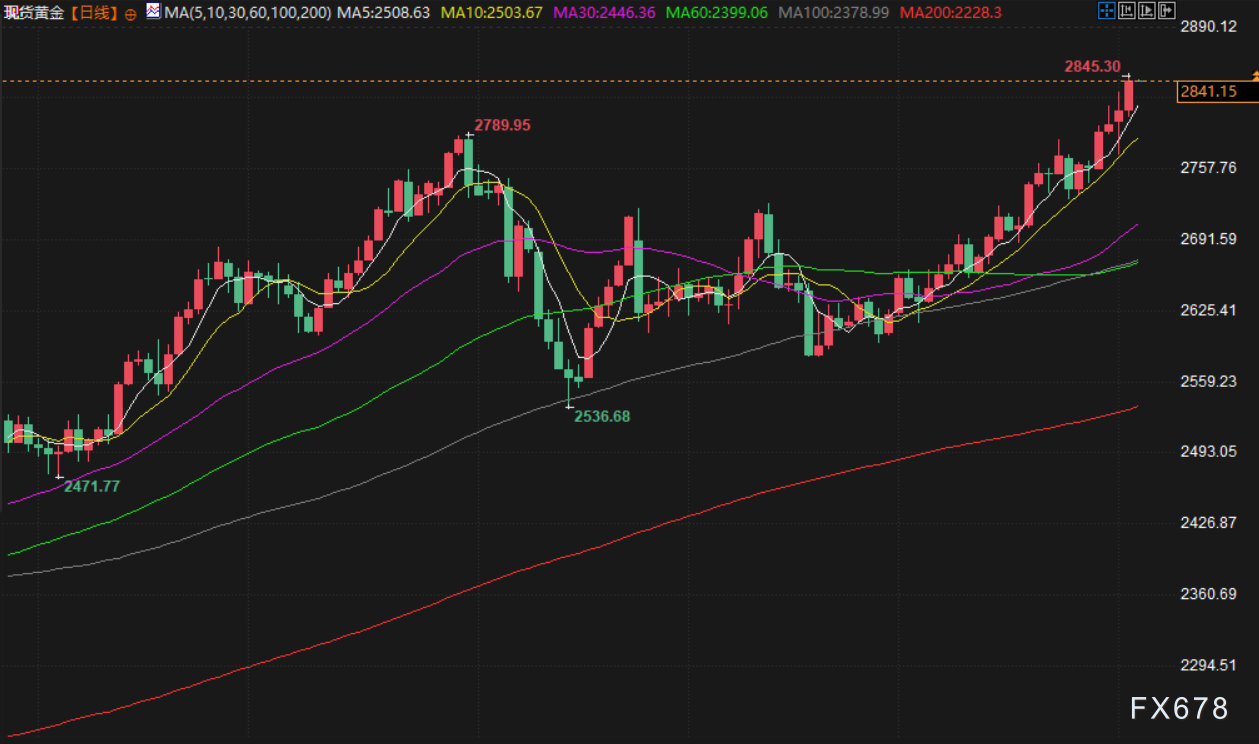
Bob Haberkorn, Senior Market Strategist at RJO Futures, said that just like overnight, there was news of tariffs; Now, I think this is the main driving force behind it more than any other news or data that came out today, but I believe they will all be overshadowed by tariff news. The US dollar has strengthened this week, but as it falls, this will definitely help with gold prices as well.
Investors' focus now shifts to Wednesday's ADP employment report, Friday's employment report, and speeches from multiple Federal Reserve officials.
Spot silver rose 2.5% to $32.33 per ounce. Platinum rose 0.4% to $967.94; Palladium fell 1.3% to $994.
Oil market
Two major indicators of crude oil fluctuated on Tuesday, affected by tariffs, and US President Trump resumed the "maximum pressure" campaign against Iran. A US official said that this move aims to reduce Iran's oil exports to zero.
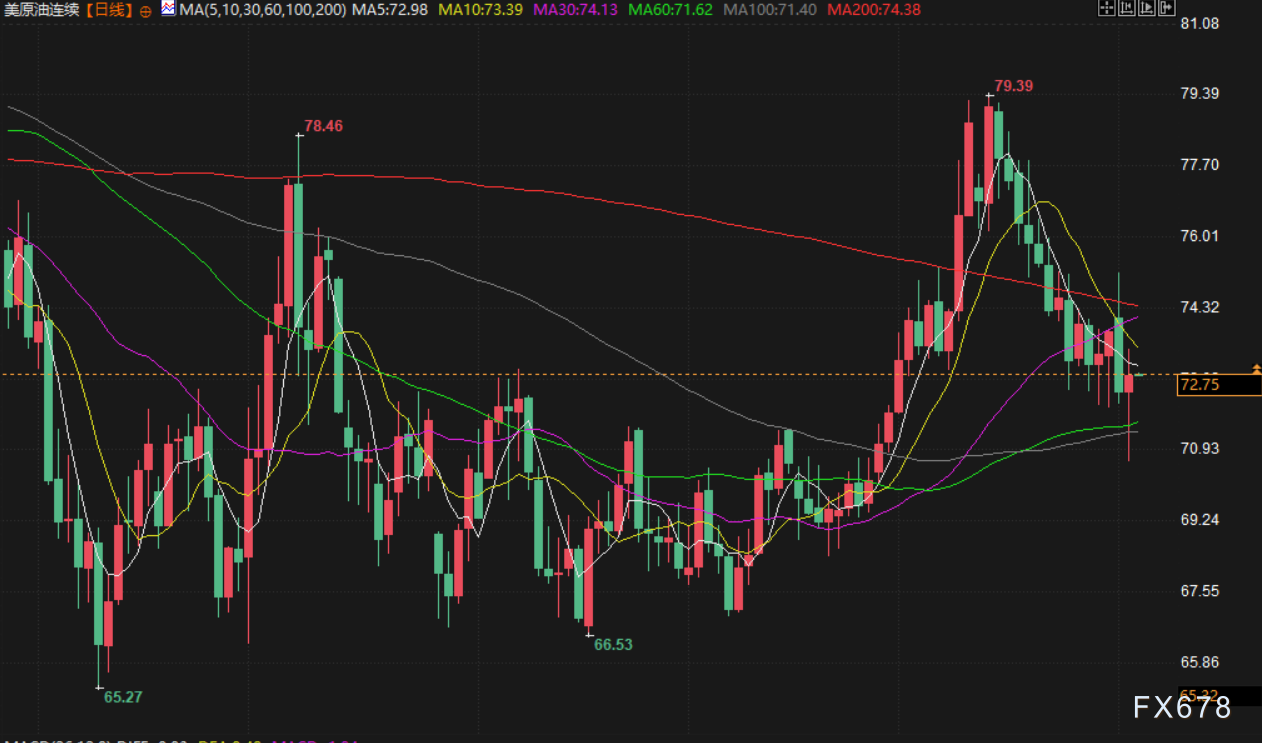
Before meeting with Israeli Prime Minister Netanyahu, Trump signed a presidential memorandum ordering the US Treasury Secretary to exert "maximum economic pressure" on Iran, including sanctions and enforcement mechanisms. US crude oil futures closed down 0.63%, settling at $72.70 per barrel. Brent crude oil futures closed up 0.32%, with a settlement price of $76.20.
Phil Flynn, an analyst at Price Futures Group, said: 'The drop in oil to near the lower end of the trading range was due to tariff retaliation actions, and the subsequent rebound was due to the' maximum pressure 'policy on Iran.'.
Investors are waiting for the American Petroleum Institute (API) to release inventory data.
currencies
The US dollar fell on Tuesday as President Trump's tariff threat was interpreted more as a negotiation strategy rather than the ultimate goal, following his suspension of planned tariffs on Mexico and Canada the day before. Foreign exchange analysts say they expect high sensitivity and volatility to tariff developments to persist.
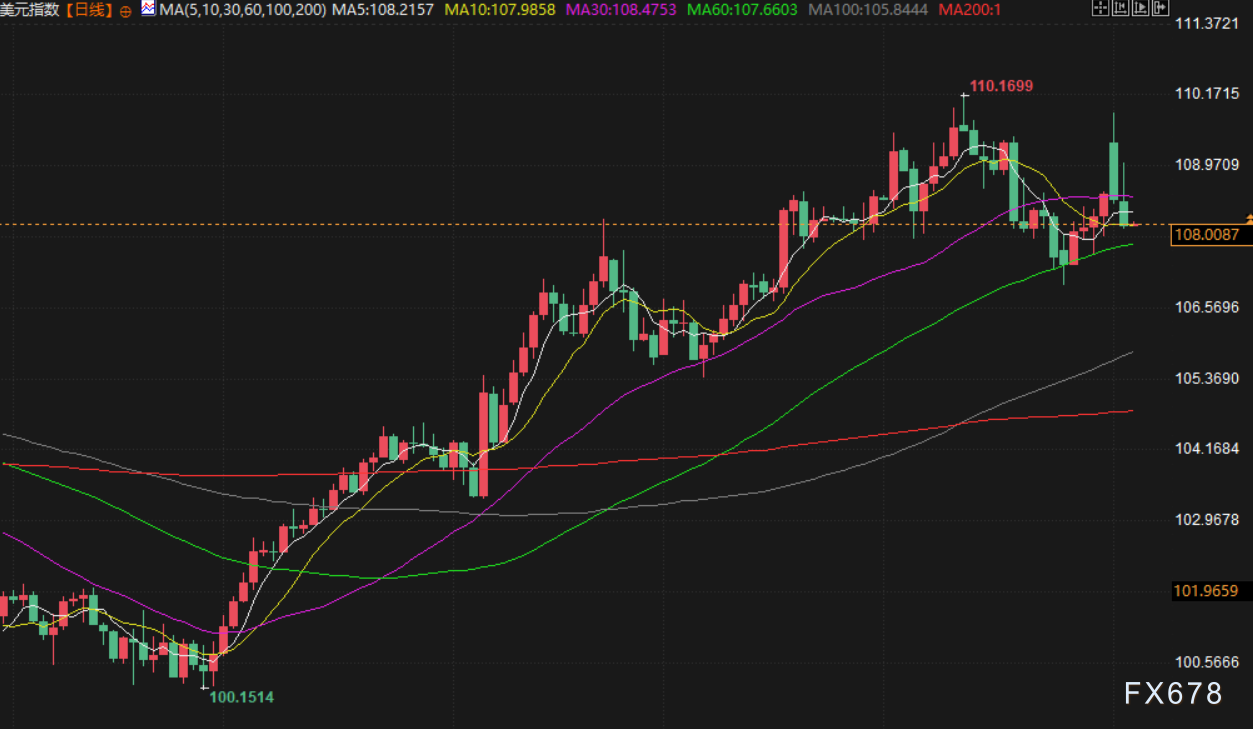
The US dollar index, which measures the weighted value of the US dollar against a basket of six major currencies, fell 0.56% to 107.97, while the Canadian dollar weakened and the Mexican peso strengthened. The euro rose slightly as Washington warned that the EU could be the next region to be subject to trade tariffs, which is widely expected to push up US inflation and keep US interest rates at higher levels for a longer period of time, thereby supporting the US dollar.
The Australian dollar rose 0.5% to $0.626, far above Monday's low of $0.6085, its weakest level since April 2020. The euro rose 0.37% to $1.038 against the US dollar, and market participants are paying attention to the parity level of the euro/US dollar. Several analysts have recently stated that US tariffs will have a deflationary effect on the eurozone.
Goldman Sachs analysts said in a research report: "Although the prospect of imposing broader comprehensive tariffs on the EU is very uncertain (now), as long as the fluctuations in tariffs continue, the long-term trade uncertainty environment itself will put pressure on the euro.
The Canadian dollar fell 0.81% against the US dollar to 1.43 Canadian dollars, rebounding significantly from the 2003 low of 1.4792 Canadian dollars hit earlier on Monday. The Mexican peso rose 1.06% to 20.546 pesos against the US dollar, jumping more than 1.5% on Monday.
The US dollar rose nearly 0.3% against the Japanese yen to 154.290 yen. The Japanese yen is considered a safe haven currency, and the attractiveness of the US dollar has decreased after its recent rise.
international news
Trump Will Resume 'Maximum Pressure' on Iran, Willing to Meet Iranian Leaders
On February 4th local time, US President Trump signed a directive aimed at restoring the "maximum pressure" policy on Iran. Trump expressed willingness to meet with Iranian leaders and work to persuade Iran to abandon its efforts to develop nuclear weapons. Trump also stated that Iran is "too close" to possessing nuclear weapons, and the United States has the right to prevent Iran from selling oil to other countries. (CCTV)
US health agency sued for Trump's order to delete health data
On February 4 local time, the American Physicians' Organization filed a lawsuit against the United States Office of Personnel Management, the Centers for Disease Control and Prevention, the Food and Drug Administration and the Department of Health and Human Services, claiming that the deletion of data by these organizations "deprives" doctors and researchers of their "access to information needed to treat patients" and creates a "dangerous gap in scientific data" in public health emergencies. (CCTV)
Von der Leyen: The EU will be ready for difficult negotiations with the United States
On the 4th, European Commission President von der Leyen said at the EU ambassadors' meeting that the EU would be ready to conduct difficult negotiations with the United States when necessary, and always firmly safeguard its own interests. Von der Leyen said that European enterprises employed 3.5 million employees in the United States, and 1 million jobs in the United States were directly dependent on trade with Europe. The bilateral trade volume between Europe and the United States has reached $1.5 trillion annually, with mutual interests at stake. The transatlantic partnership is crucial for both parties.
The Director General of the International Atomic Energy Agency inspects the Ukrainian substation and states that the situation is critical
On February 4th local time, it was learned from the Ukrainian side that the Director General of the International Atomic Energy Agency, Grossi, and his delegation had inspected nine substations in Ukraine that are crucial for the operation of nuclear power plants and assessed that the situation is quite critical. In addition, there are reports that Grosi, after inspecting the substation in Kiev Oblast earlier that day, stated that the substation is crucial for nuclear safety. He also stated that direct attacks on substations and power outages could lead to nuclear accidents. The International Atomic Energy Agency will assess the impact of this trip and provide support and assistance to prevent the risk of nuclear accidents.
US job vacancies fall to three-month low in December, in line with the gradual slowdown of the labor market
The job vacancies in the United States fell to a three-month low in December, in line with the gradual slowdown of the labor market. The Job Openings and Labor Mobility Survey (JOLTS) released by the US Bureau of Labor Statistics on Tuesday showed that the number of job vacancies decreased from a revised 8.16 million in November to 7.6 million. This number is lower than the expectations of almost all economists surveyed by Bloomberg.
20000 US federal employees have accepted Trump's "buyout" layoff plan, and the number may continue to rise
According to reports, a senior US government official stated that approximately 20000 federal workers have accepted the "buyout" proposal put forward by the Trump administration last week. This is a considerable number, accounting for about 1% of federal employees, but still far below the target of layoffs of 5% to 10%. This proposal will continue until Thursday, meaning that despite strong opposition from unions and other parties, the number of people accepting the 'buyout' plan may increase. We expect more people to accept the proposal. If you see what is happening at the US Agency for International Development, you will find that this is just part of the puzzle, "the official said. Previously, the White House issued a notice to federal employees, requiring them to decide whether to return to the office full-time or resign before February 6th. If you choose to resign, you will receive 8 months of full salary and benefits, while being exempt from face-to-face work requirements during this period. Forcing employees to return to the office will result in 5% -10% of federal employees resigning, and it is expected that this policy can save up to $100 billion in expenses annually.
The Trump administration is pushing for the closure of the Department of Education
On February 4th local time, according to CNN, two informed sources stated that the Trump administration has begun drafting an executive order to initiate the process of dismantling the US Department of Education. According to sources, the order will instruct the Minister of Education to develop a plan to reduce the Ministry of Education through administrative actions. Trump will also push Congress to pass legislation to shut down the department. Trump said he hopes his chosen Secretary of Education, Linda McMahon, will 'make himself unemployed'. It is reported that this is Trump's latest move to fulfill his campaign promises. During the campaign, Trump repeatedly pointed out that the Department of Education was a symbol of federal government overreach, advocating for states to manage schools. (CCTV)
Domestic news
Low altitude economy adds vitality to economic development, market size may exceed one trillion yuan by 2026
In March 2024, the low altitude economy was first included in the government work report, positioned as a new growth engine. The low altitude economy includes four major sectors: low altitude infrastructure construction, low altitude aircraft manufacturing, low altitude operation services, and low altitude flight support. Running from the ground to the sky, low altitude economy can effectively activate three-dimensional space, reshape transportation and logistics methods, and greatly improve service efficiency. With the increasing demand for low altitude commercialization and the growing maturity of technology, and with the support of policies, the low altitude economy is rapidly rising in China, with great development potential and the potential to become an important engine for economic development. CCID Consulting estimates that the scale of China's low altitude economy is expected to reach 67025 billion yuan in 2024, 859.17 billion yuan in 2025, and optimistically expected to exceed one trillion yuan by 2026.