**********On Thursday (February 13th Beijing time), spot gold trading was around 2904.20. Gold prices remained stable on Wednesday, supported by safe haven demand. US President Trump's new tariff policy has raised concerns about global trade, while the market is digesting higher than expected inflation data from the United States; US crude oil traded around 71.29, with oil prices closing down more than 2% on Wednesday after US President Trump took the first diplomatic step towards his promise to end the Ukraine war.

The S&P 500 index closed down 0.27% on Wednesday, closing at 6051.97 points. The Nasdaq index rose 0.03% to 19649.95 points; The Dow Jones Industrial Average fell 0.50% to 44368.56 points.
Key focus for the day: IEA releases monthly crude oil market report, UK GDP data, US PPI data, and US initial jobless claims for the week ending February 8th.
stock market
The S&P 500 index closed lower on Wednesday after higher than expected US inflation data intensified market concerns that the Federal Reserve would not cut interest rates soon, while CVS Health and Gilead Sciences rebounded after releasing optimistic quarterly reports.
Nvidia and Amazon fell more than 1%, as these two heavyweight companies in the field of artificial intelligence computing dragged down the S&P 500 index. The largest increase in consumer prices in nearly a year and a half in the United States in January has strengthened the message that the Federal Reserve is not in a hurry to further cut interest rates. The soaring prices have issued a warning for US President Trump's push to impose tariffs on imported goods, which economists generally believe will stimulate inflation.
According to CME Fedwatch, the trend of interest rate futures currently indicates that traders expect the possibility of the Federal Reserve further cutting interest rates by 25 basis points in 2025 to be about 70%, lower than Tuesday's expectation of about 80%.
Jake Dollarhide, CEO of Longbow Asset Management in Tulsa, Oklahoma, said, "The market is digesting the possibility that the Federal Reserve will not cut interest rates at all, which is why the stock market is falling
Among the 11 sectors of the S&P 500 index, nine fell, with the energy sector leading the decline with a drop of 2.69% and the real estate sector falling by 0.91%. CVS Health surged 15% as the healthcare group's fourth quarter profit exceeded expectations, indicating improved performance under the leadership of new CEO David Joyner. Gilead Sciences surged 7.5% after the biotechnology company's 2025 profit forecast exceeded analysts' expectations.
Federal Reserve Chairman Powell reiterated during his second day of testimony in Congress on Wednesday that the Fed is not in a hurry to cut interest rates. The January inflation data is the last data that has not been directly affected by Trump's tariff measures, which came into effect this month. Trump's trade advisers are finalizing plans to impose reciprocal tariffs on every country that imposes import tariffs on American goods.
The Cboe Volatility Index, also known as the Wall Street Fear Index, has surged to a new weekly high. After the release of inflation data, bond yields soared, with 10-year bond yields reaching a new high in over two weeks.
King City
Gold prices remained stable on Wednesday, supported by safe haven demand. US President Trump's new tariff policy has raised concerns about global trade, while the market is digesting higher than expected inflation data from the United States. Spot gold remains stable at $2895.30 per ounce. US futures closed 0.1% lower, with a settlement price of $2928.70.
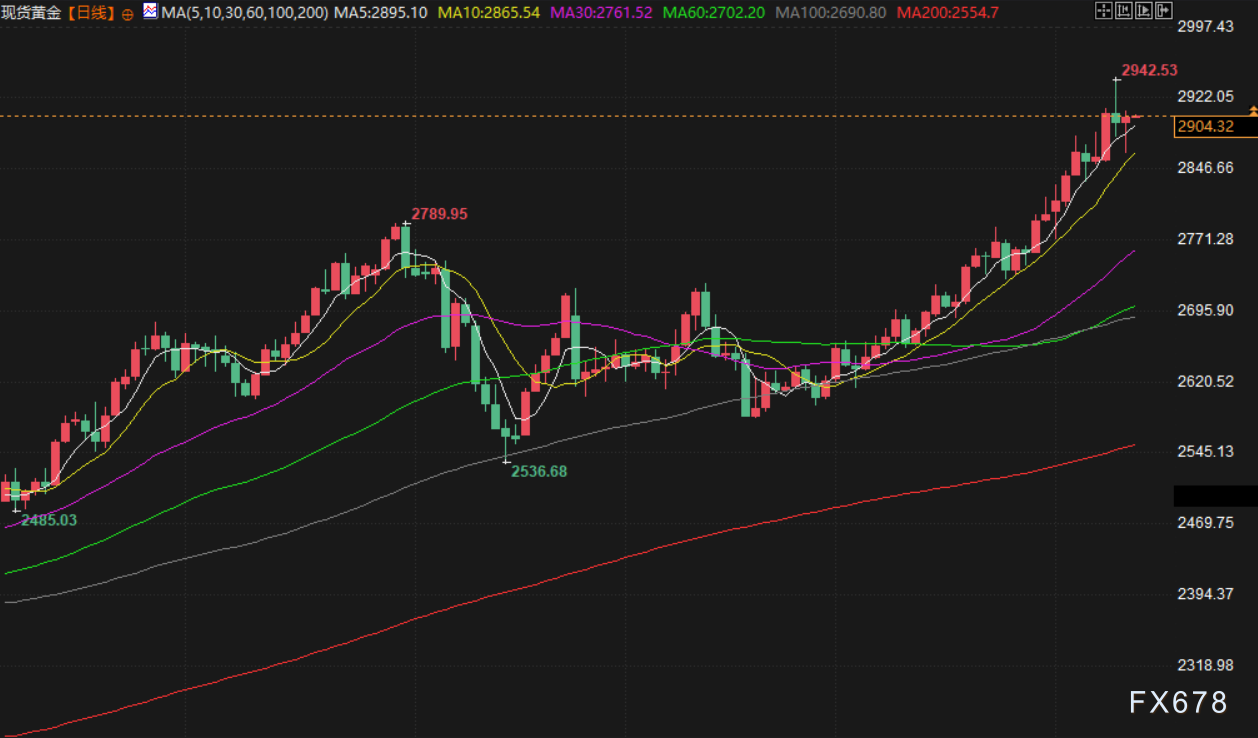
Data shows that the US Consumer Price Index (CPI) jumped by 0.5% in January, higher than expected, and gold prices fell by more than 1% at one point. The data reinforces the Federal Reserve's message that it is not in a hurry to resume interest rate cuts amidst increasing economic uncertainty.
David Meger, head of metal trading at High Ridge Futures, said that today's CPI data was higher than expected, putting pressure on the gold market. Obviously, any expectations in the market for a rate cut later this year have been hit
Peter Grant, Vice President and Senior Metals Strategist at Zaner Metals, said, "Although high interest rates have put some pressure on gold, the trend is still positive, and trade concerns continue to drive the market." After raising steel and aluminum tariffs to 25% earlier this week, US President Trump's advisers are currently finalizing a plan for reciprocal tariffs.
Spot silver rose 1.1% to $32.17 per ounce; Palladium fell 0.2% to $973.74; Platinum rose 0.6% to $989.43.
Oil market
Oil prices fell more than 2% on Wednesday after US President Trump took the first diplomatic step towards his promise to end the war in Ukraine. Brent crude oil closed down 2.36% at $75.18 per barrel. US crude oil closed down 2.66% at $71.37. US crude oil futures fell more than $2 during trading. Previously, Brent crude oil and US crude oil rose for three consecutive days, with Brent crude oil up 3.6% and US crude oil up 3.7%.
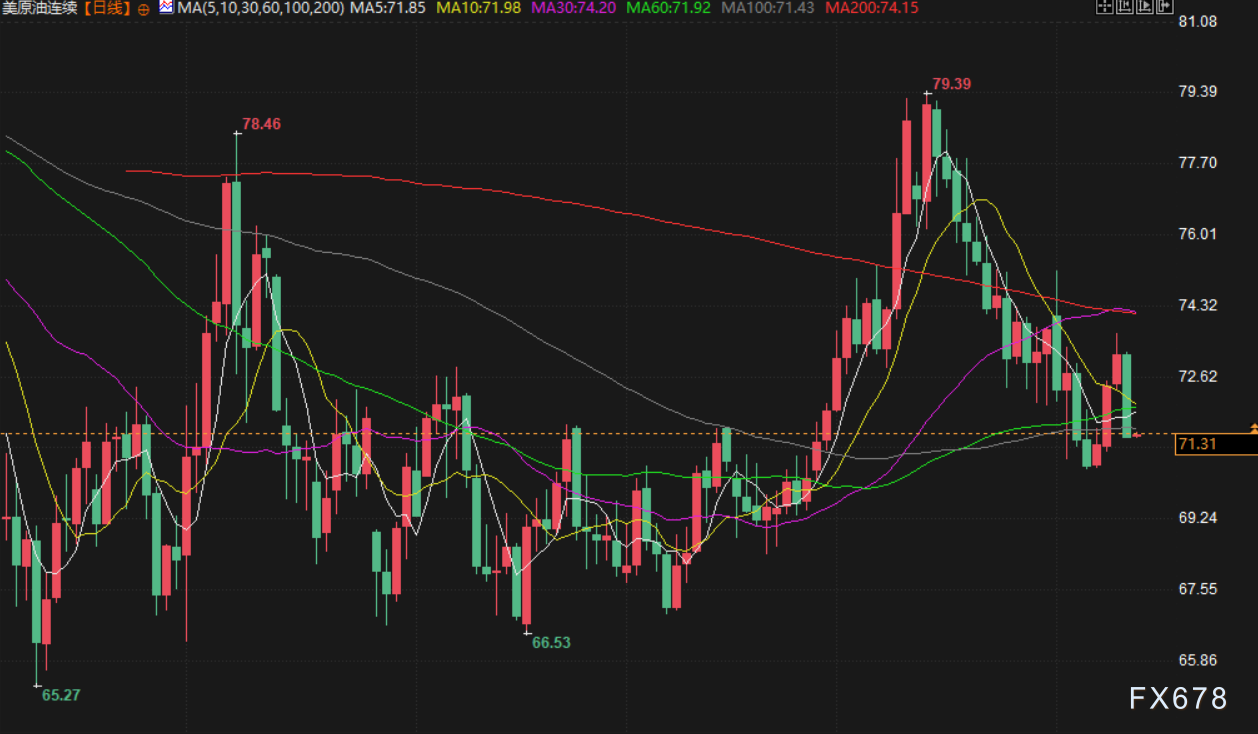
US President Trump discussed the issue of the Ukrainian war during phone conversations with Russian President Putin and Ukrainian President Zelensky. Phil Flynn, Senior Analyst at Price Futures Group, said, "Trump's negotiations, I believe, have led to a decrease in the current risk premium of oil prices
After Federal Reserve Chairman Powell's comments on Tuesday and Wednesday's data showing that consumer prices in the United States rose more than expected in January, investors are also trying to gauge the Fed's next move to cut interest rates. Powell said that the economic situation is good and the Federal Reserve is not in a hurry to further cut interest rates, but if inflation declines or the job market weakens, the Federal Reserve is prepared to cut interest rates.
The US Energy Information Administration (EIA) announced on Wednesday that the increase in US crude oil inventories last week exceeded expectations. At the same time, gasoline inventory unexpectedly decreased, while distillate inventory unexpectedly increased. The Organization of the Petroleum Exporting Countries (OPEC) stated in a monthly report that global oil demand will increase by 1.45 million barrels per day in 2025 and 1.43 million barrels per day in 2026. Both predictions remain unchanged from last month.
currencies
The US dollar rose to its highest level in a week against the Japanese yen on Wednesday, after data showed that consumer prices in the United States rose more than economists expected in January, increasing the possibility that the Federal Reserve will maintain high interest rates in its efforts to reduce price pressures.
Consumer prices in the United States recorded the largest increase in nearly a year and a half, and Americans are facing higher prices for a range of goods and services.
The overall Consumer Price Index (CPI) in the United States increased by 0.5% month on month in January, with the core CPI rising by 0.4%. The expected increase is 0.3%. The January CPI increased by 3.0% year-on-year, higher than the expected 2.9%, and the core CPI increased by 3.3% year-on-year, higher than the expected 3.1%.
Adam Button, Chief Currency Analyst at ForexLive, said, "Regardless of the reasons for the higher than expected rate, the Federal Reserve has made it very clear that it will not cut interest rates until the inflation rate approaches 2%. Whether it is the one-time impact caused by eggs or the California wildfire, with a 0.5% increase at the beginning of the year, the prospect of inflation reaching 2% this year is greatly discounted
Interest rate futures traders currently believe that there will be a 27 basis point rate cut before the end of the year, which means there is a high possibility of only one 25 basis point rate cut throughout the year. The expected rate cut before the data was released was about 37 basis points.
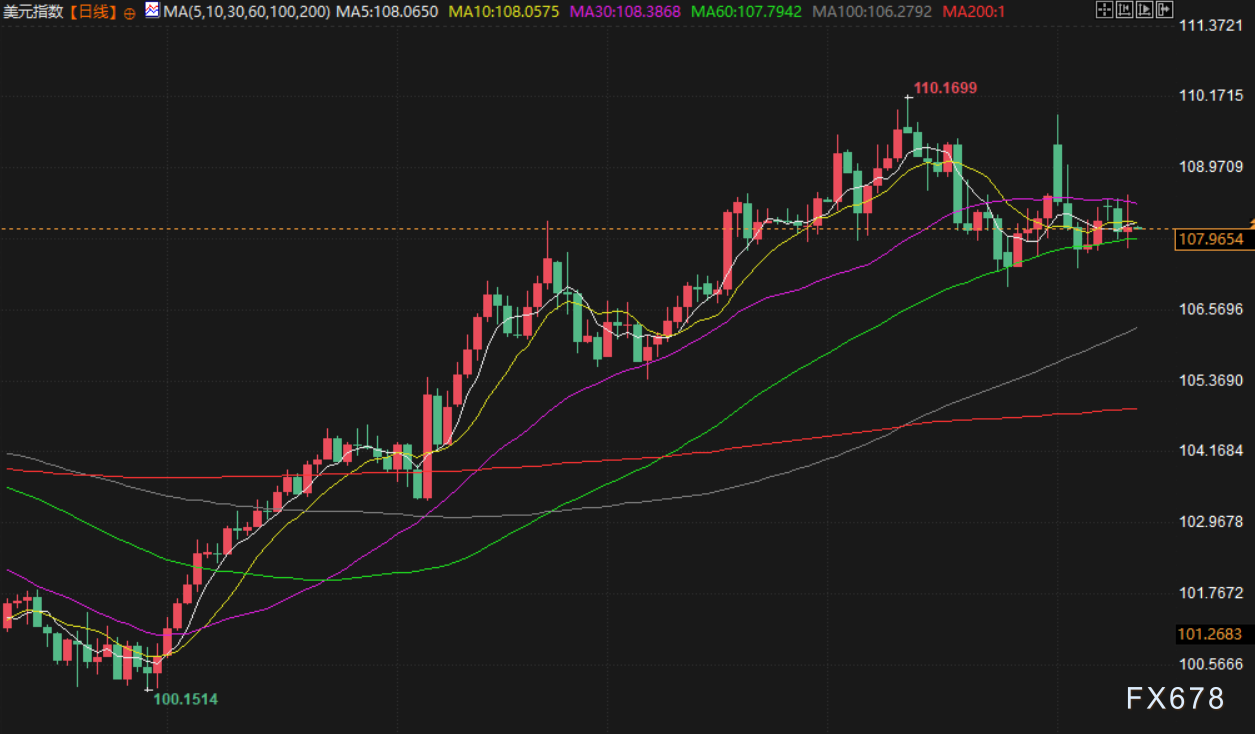
The US dollar jumped 1.29% against the Japanese yen to 154.44, as the yen is highly sensitive to the interest rate differential between the United States and Japan.
The US dollar index rose 0.02% to 107.95, having previously touched a one week high of 108.52. As traders take profits and evaluate whether the January inflation report is abnormal and unlikely to indicate a larger upward trend in prices, the US dollar narrows its gains.
Thomas Simons, Chief US Economist at Furui, stated in a report that "January is troublesome because various things announce annual price increases, sometimes significant, and we don't tend to think the same thing will happen next month“
Federal Reserve Chairman Powell reiterated on Wednesday during his second congressional hearing this week that he is not in a hurry to cut interest rates, but stated that "significant progress" has been made on inflation.
On Wednesday, the European Central Bank's Board of Governors and President of the Bundesbank, Nagel, stated that the ECB should only gradually relax its policies and should not target the difficult to define "neutral" interest rate level. This also boosted the euro. The euro against the US dollar closed at $1.0388 in New York, up 0.27%.
Traders are still paying attention to the Trump administration's tariffs, and some analysts are concerned that if tariffs are implemented, it may increase price pressure. James Knightley, Chief International Economist of ING, stated in a report on Wednesday that potential tariffs pose an upward risk to inflation in the coming quarters.
The White House stated that the Trump administration will announce equivalent tariffs on every country that imposes tariffs on US imports before Thursday. Trump also plans to increase the import tariffs on steel and aluminum to 25% starting from March 4th.
international news
The budget deficit for the first four months of fiscal year 2025 in the United States reached a record high of $840 billion
The federal budget gap in the United States widened to a record $840 billion in the first four months of this fiscal year, driven by increased spending in areas such as healthcare, social security, and debt interest payments. The Ministry of Finance stated that the deficit increased by $129 billion in January alone. After adjusting for calendar differences, the cumulative deficit from October to January increased by 25%. A senior official from the Ministry of Finance stated that the figures for 2024 were exaggerated by deferred taxes related to natural disasters in 2023. The total expenditure for the past four months was $2.44 trillion, an increase of 7% after adjusting for calendar differences.
Federal Reserve Chairman Powell warns against overinterpreting CPI data
Federal Reserve Chairman Powell warned on Wednesday not to overinterpret data showing the largest month on month increase in the Consumer Price Index (CPI) in over a year, while acknowledging that the reading was significantly higher than expected. Powell said at the hearing of the House Financial Services Committee that the CPI reading is almost higher than all predictions, but I just want to remind you of two points. Firstly, we will not get excited about one or two good readings, nor will we get excited about one or two bad readings. Secondly, our inflation target focuses on the Personal Consumption Expenditures (PCE) price index, as we believe it is a better indicator for measuring inflation. Therefore, you need to know the conversion from CPI to PCE, and tomorrow we will obtain more relevant data from the Producer Price Index (PPI). We will know the PCE reading later tomorrow.
Ukrainian President: Received draft of US Ukraine cooperation agreement
On February 12th local time, Ukrainian President Zelensky met with visiting US Treasury Secretary Besson. Zelensky stated that US Treasury Secretary Vincent brought a partnership agreement that includes economic cooperation between the two countries. Zelensky announced the news after his meeting with Besent, stating that Ukraine has received a draft of the US partnership agreement between the two countries. Ukraine will conduct research on this as soon as possible. Zelensky stated that the meeting with Besent was constructive, including issues of security and mineral resources. (CCTV)
US and Russian Presidents on Phone Trump: The conversation was productive
US President Trump stated that he had a lengthy and highly productive phone conversation with Russian President Putin on that day. Both sides discussed the Ukraine issue, the Middle East, energy, artificial intelligence, the power of the US dollar, and multiple other topics. Trump said that both sides hope to end the Russia-Ukraine conflict and agree to close cooperation, including mutual visits to each other's countries. Both sides also agreed to have their respective teams start negotiations immediately and will first contact Ukrainian President Zelensky to inform him of the content of the call. Trump stated that he has requested the US Secretary of State, Director of the Central Intelligence Agency, National Security Advisor, and Middle East envoy Witkov to lead the negotiations, and Trump firmly believes that these negotiations will be successful.
US Defense Secretary says it is unrealistic for Ukraine to restore borders
On February 12th, the International Contact Group on Ukrainian Defense Issues held a meeting in Brussels, Belgium. In his speech at the meeting, US Defense Secretary Hegeses said that the Russia-Ukraine conflict must end and the two sides must return to the negotiating table. Haggis also emphasized, "It is unrealistic for Ukraine to return to its pre-2014 borders; it is unrealistic for Ukraine to join NATO after negotiations with Russia; Ukraine's lasting peace must be guaranteed by security, but the deployment of European and non European military forces as peacekeeping personnel to Ukraine cannot be considered a NATO mission and is not protected by NATO's collective defense clause; the US military will not be deployed to Ukraine
The interest rate spread between Europe and America attracts US companies to issue reverse Yangji bonds, with the highest issuance volume since 2007 this year
Blue chip companies in the United States are issuing Eurobonds at an extremely fast pace in order to lock in much lower borrowing costs across the Atlantic. Data shows that so far this year, the issuance scale of so-called reverse Yangji bonds has reached 23.4 billion euros (24.3 billion US dollars), the highest since the same period in 2007. The large-scale bond issuance transactions of T-Mobile USA and IBM, as well as the issuance of bonds by major Wall Street banks, have all boosted the total amount of bonds issued.
OPEC warns that US trade policies may exacerbate global market volatility
OPEC warns that US President Donald Trump's trade policies may exacerbate global market volatility. The oil producing country organization stated in its monthly report on Wednesday that the new tariffs have added more uncertainty to the market, potentially causing supply-demand imbalances that do not reflect market fundamentals, resulting in greater volatility.
Domestic news
Fill in the gaps! China's 80 meter length national measurement standard has reached the international leading level
The State Administration for Market Regulation recently approved the establishment of a large-span benchmark device, which has a measurement range of up to 80 meters and an error of only 2.45 microns within the measurement range, equivalent to a human distinguishing the diameter of a hair strand from 1600 meters away, reaching an international leading level. The establishment of the long length benchmark device this time fills the gap in the highest measurement capability of the manufacturing industry for long lengths, greatly improving the accuracy and quality reliability of the processing and assembly of key components for large-scale equipment such as spacecraft docking, aircraft wing assembly, ship hull assembly measurement, wind turbine blade surface contour detection, and water and electricity turbine impeller curvature measurement. It is of great significance for promoting the high-quality development of the manufacturing industry.
108 large models have been registered in three provinces and one city in the Yangtze River Delta
As of January 2025, 108 large models in the three provinces and one city of the Yangtze River Delta have been registered with the Cyberspace Administration of China, with 26 new national level registrations added in November and December 2024 alone. Recently, Shanghai announced that it has taken the lead in achieving the 2025 scale target for the artificial intelligence industry, while cities such as Hangzhou and Hefei have entered the final sprint. In the new year, the development of the artificial intelligence industry in the Yangtze River Delta may reach a new level.