**********The Bank of EnglandChief Economist Hugh Peel stated in a public speech that although progress has been made in the UK's de inflation process, it is still incomplete, so the Bank of England needs to remain cautious when deciding to cut interest rates.
Progress has been made in reducing inflation, but it is not yet complete. We can lower the restrictive level of some monetary policies. "Pierre emphasized in his speech that the current economic environment still faces certain inflationary pressures, and adjustments to monetary policy need to balance risks rather than aggressively cut interest rates.
The market generally expects the Bank of England to initiate a rate cut cycle in the second half of 2024 to support economic growth. But Peel's statement suggests that the Bank of England may not act as quickly as the market expects. It is expected that there will be further interest rate cuts, but at a slower pace. He pointed out that the central bank still needs to closely monitor the trend of inflation to avoid premature policy relaxation leading to a rebound in price pressure.
Trade policies may have long-term impacts
In addition to monetary policy, Peel also mentioned that the US government's trade policy may have a profound impact on the UK economy. He believes that the tariff policies adopted by the United States may have an impact on the global trade environment, "especially in the long run, which could be quite significant
As a highly trade dependent economy, the uncertainty in the international market poses challenges to the growth and inflation path of the UK economy. When formulating policies, the Bank of England needs to weigh the potential impact of external factors to ensure economic stability.
Short term impact: GBP may be supported, long-term trend remains uncertain
1. Monetary policy expectations support the pound
Peel's statement indicates that the Bank of England will not rush to cut interest rates in the short term, which is different from the market's previously optimistic expectation of a rate cut. The correction of market interest rate expectations may support the pound in the short term, as higher interest rate levels typically enhance the attractiveness of the local currency and attract international capital inflows.
The recent trend of the pound against the US dollar and the euro is mainly influenced by UK economic data and expectations of central bank policies. If future inflation data remains high, the market may further reduce its bet on the Bank of England cutting interest rates, which will provide further support for the pound.
2. US trade policies may affect the long-term trend of the pound
However, in the long run, the pound still faces uncertainty in the external environment, especially the potential indirect impact of US trade policies on the UK economy. If global trade frictions intensify, it may put pressure on the UK export industry, thereby affecting economic growth and forcing the Bank of England to adopt a looser monetary policy in the future.
In addition, if global economic growth slows down and market risk aversion heats up, the pound may face volatility. Investors may be more inclined to hold safe haven assets such as the US dollar, which could weaken the upward potential of the pound.
How will the Bank of England respond to future economic challenges?
In the coming months, the Bank of England's policies will depend more on inflation and economic growth data. If inflation continues to fall and economic growth is sluggish, the Bank of England may gradually relax monetary policy in the second half of 2024, which could put pressure on the pound. But if inflation stickiness is strong, the Bank of England may maintain a high interest rate environment for a longer period of time, which will support the pound.
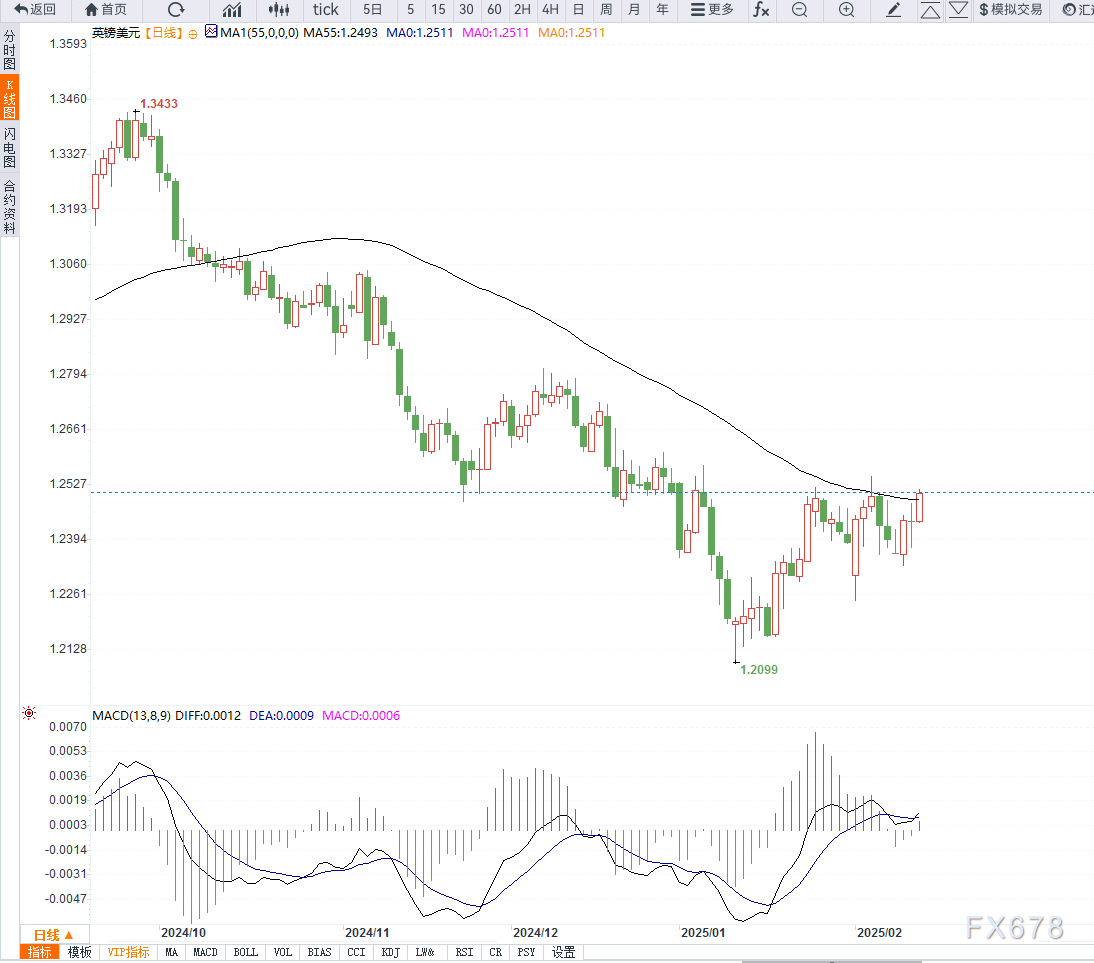
Editor's viewpoint: The market needs to be vigilant about the risk of a pullback after the short-term rebound of the pound
Although Peel's statement may boost the pound in the short term, the market still needs to pay attention to several key factors:
1. Whether the inflation trend meets expectations: If inflation in the UK falls faster than expected, the market may still bet on interest rate cuts in advance, weakening the support for the pound.
2. Changes in the global economic environment: The policy path of the Federal Reserve, the performance of the European economy, and the growth prospects of the UK itself will all affect the trend of the pound.
3. Trade policy uncertainty: US trade policy remains a potential risk that may affect UK exports and overall economic stability in the long term.
Overall, in the short term, the pound may be supported by the cautious stance of the Bank of England, but in the long term, external risks still need to be cautious, and the market needs to maintain flexibility when trading the pound.