stock market
The US stock market rose slightly on Wednesday, with the S&P 500 index hitting a historic closing high for the second consecutive day. Investors carefully studied the minutes of the Federal Reserve's January policy meeting and digested US President Trump's tariff plan.
At the January policy meeting, the Federal Reserve kept key interest rates unchanged. The meeting minutes show that decision-makers are concerned about the stubborn high inflation and the potential impact of Trump's policy proposals (especially tariffs) on their efforts to reduce price increases to target levels.
Paul Nolte, Senior Wealth Advisor and Market Strategist at Murphy&Sylvest, stated that there were some discussions in the meeting minutes suggesting that there may be some economic slowdown in the future, which may lead investors to believe that the Federal Reserve may cut interest rates, which is still on the agenda. That is to say, the Federal Reserve is not willing to take any action until the tariff issue becomes clearer, so from this perspective, it is a wait-and-see process. "
Trump announced on Tuesday that he will impose tariffs of "around 25%" on cars, semiconductors, and drugs, the latest in a series of measures that have raised concerns about the consequences of global trade. Nolte said, "I think people are starting to see it as a bargaining chip or a show of strength, with more talk than action
The US Department of Commerce reported a sharp drop of 9.8% in housing starts in January, due to weak demand, rising mortgage rates, and a series of unusually cold weather conditions. Housing stocks performed poorly, falling 1.5%.
Among the 11 major sectors of the S&P 500 index, healthcare has the largest percentage increase, while materials and finance have lagged behind.
According to data from the London Stock Exchange Group (LSEG), the fourth quarter earnings season is coming to an end, with 74% of companies in the S&P 500 index reporting better than expected results.
According to LSEG data, analysts currently believe that the S&P 500 index's fourth quarter profit increased by 15.3% year-on-year, a significant increase from the initial estimate of 9.6% at the beginning of the year. Electric truck manufacturer Nikola plummeted 39.1% after filing for bankruptcy protection. Specialty chemical company Celanese plummeted 21.5% after reporting a quarterly loss.
King City
After hitting a record high on Wednesday, gold prices fell as the US dollar rose and investors were nervous about President Trump's latest tariff threat. Spot gold fell 0.2% to $2928.49 per ounce, previously hitting a record high of $2946.85 per ounce. US futures closed 0.4% lower, with a settlement price of $2936.10.
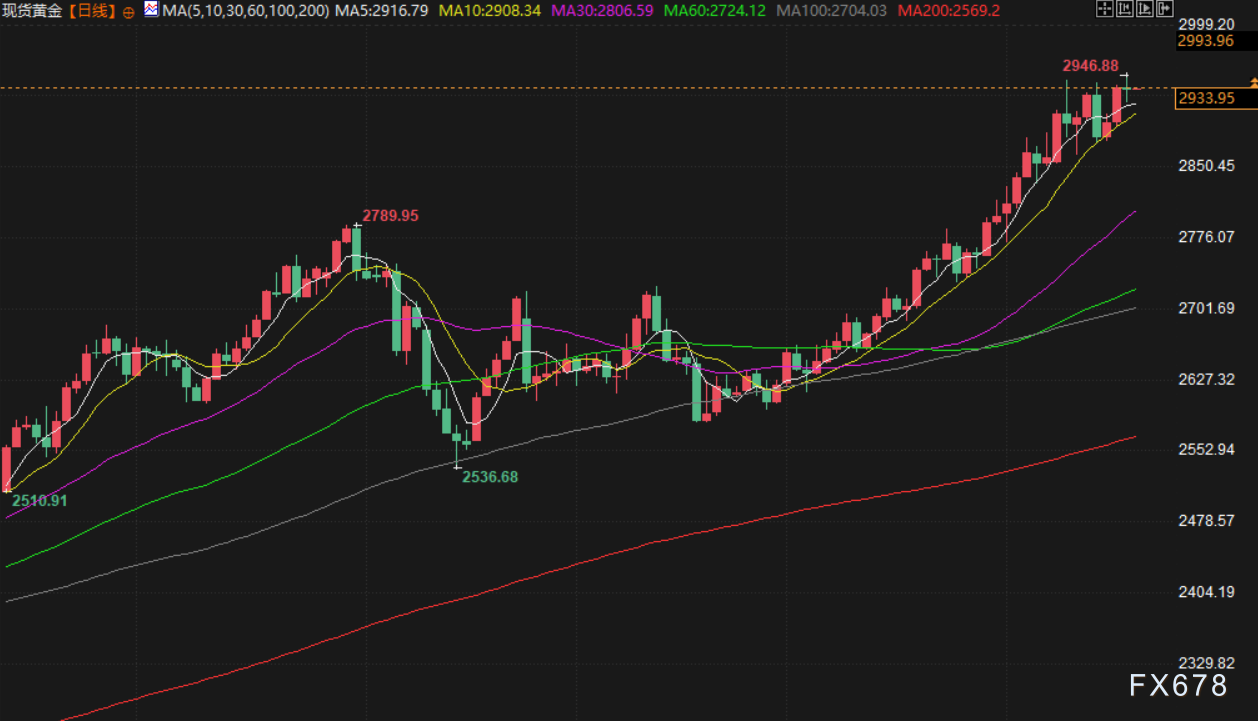
Sprott Asset Management market strategist Paul Wong said, 'We are in an unusual state of high uncertainty... The catalyst is global tariff and trade negotiations or threats,' which provides support for gold prices.
Trump said on Tuesday that he plans to impose "around 25%" car tariffs and similar tariffs on semiconductor and pharmaceutical imports. Federal Reserve officials are still uncertain about the potential impact of tariffs on inflation.
According to data from the London Stock Exchange Group (LSEG), traders currently believe that the Federal Reserve will cut interest rates at least once, by 25 basis points, with a 44% chance of a second rate cut before the end of the year.
After Trump took office, Federal Reserve officials expressed concerns about inflation, stating at their January policy meeting that they expect businesses to raise prices to offset the impact of import tariffs.
Spot silver fell 0.4% to $32.74 per ounce. Platinum fell 1.7% to $970.45; Palladium fell 1.6% to $971.47.
Oil market
Oil prices remained near a one week high on Wednesday as the market was concerned about supply disruptions from Russia and the United States, and as Washington attempted to push for an agreement to end the Ukraine war, the market was waiting for clarity on sanctions.
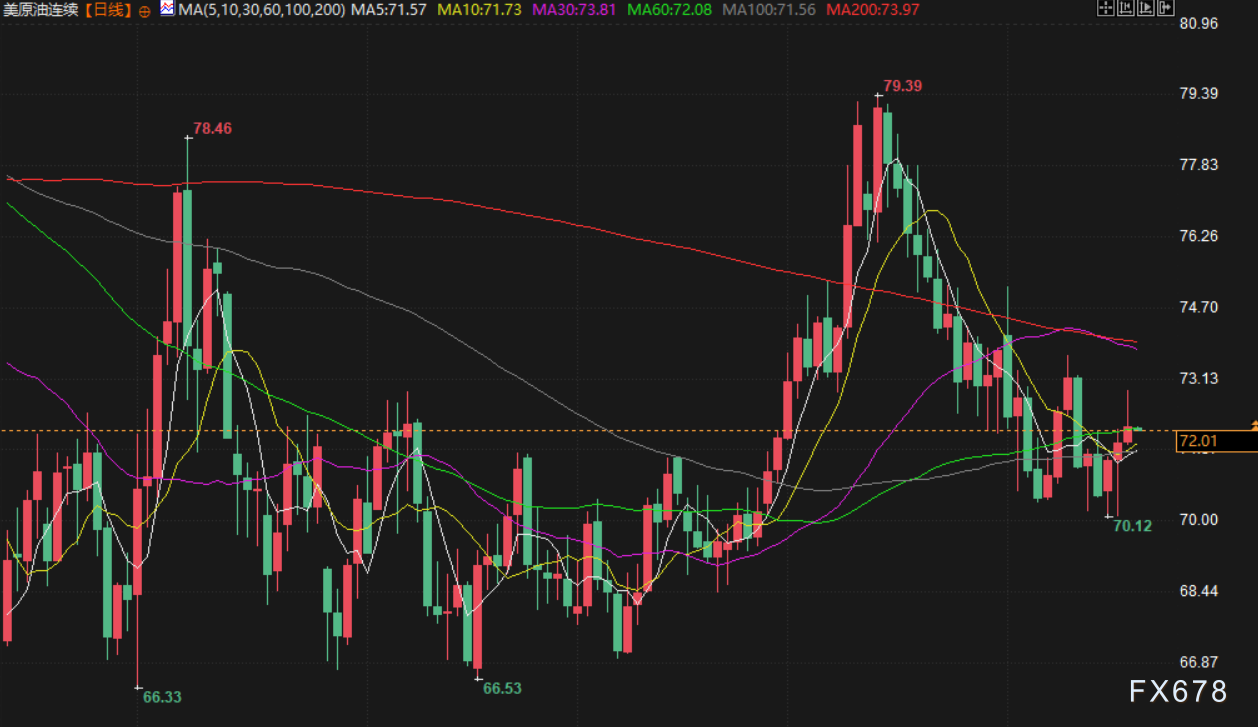
Brent oil price was 0.3%, closing at $76.04 per barrel; US crude oil rose 0.6% to close at $72.25. This is the highest closing price of two major indicators of crude oil since February 11th.
Aldo Spanjer, a commodity strategist at BNP Paribas, said, "The market is trying to make decisions on three bullish drivers: Russia, Iran, and OPEC, and people are trying to figure out the impact of the sanctions that have been announced and actually implemented
Drone attacks on Russia's oil infrastructure are reducing supply. Russia claims that after a drone attack on a pumping station in Ukraine, the oil flow of the Caspian Sea Oil Pipeline (CPC), which is the main channel for Kazakhstan's crude oil exports, decreased by 30% -40%. According to Reuters calculations, a 30% reduction is equivalent to losing 380000 barrels of market supply per day.
In the United States, cold weather threatens oil supply, and the North Dakota Pipeline Authority estimates that the state's production will decrease by up to 150000 barrels per day. US President Trump condemned Ukrainian President Zelensky on Wednesday and said he should take swift action to ensure peace.
Goldman Sachs analysts say that regardless of the likelihood of a peace agreement between Russia and Ukraine mediated by the United States, any relaxation of sanctions against Russia is unlikely to lead to a significant increase in oil flows.
currencies
Safe haven currencies such as the US dollar and Japanese yen rose on Wednesday as US President Trump issued the latest round of tariff threats and negotiations to end the Russia Ukraine war were controversial, leading to increased market tension. The US dollar fell further against the Japanese yen, as previously released minutes of the Federal Reserve meeting showed that Trump's preliminary policy proposals have raised concerns among the Fed about rising inflation. The meeting minutes also confirmed that interest rate cuts will continue to be suspended.
The US dollar has generally risen against the euro, pound, Australian dollar, Canadian dollar, and emerging market currencies such as the Mexican peso, and investors will buy these currencies when their risk appetite is high. On the other hand, the Japanese yen has risen against most major currencies such as the US dollar, euro, Swiss franc, and pound. Trump announced on Tuesday evening that he plans to impose tariffs of "about 25%" on cars and similar tariffs on imports of semiconductors and pharmaceuticals, which has driven the aforementioned upward trend. Trump said last Friday that the car tariffs would be implemented as early as April 2, the day after cabinet members submitted a report outlining a range of import tariff options to him.
Chester Ntonifor, Chief Foreign Exchange and Global Fixed Income Strategist at BCA Research in Montreal, said, "So far, the trajectory of the US dollar is consistent with the last Trump administration... We basically agree that Trump is doing what he says." He was referring to tariff policy, which has been one of Trump's core policy propositions since taking office. Overall, in the short term, the US dollar will be influenced by Trump's remarks
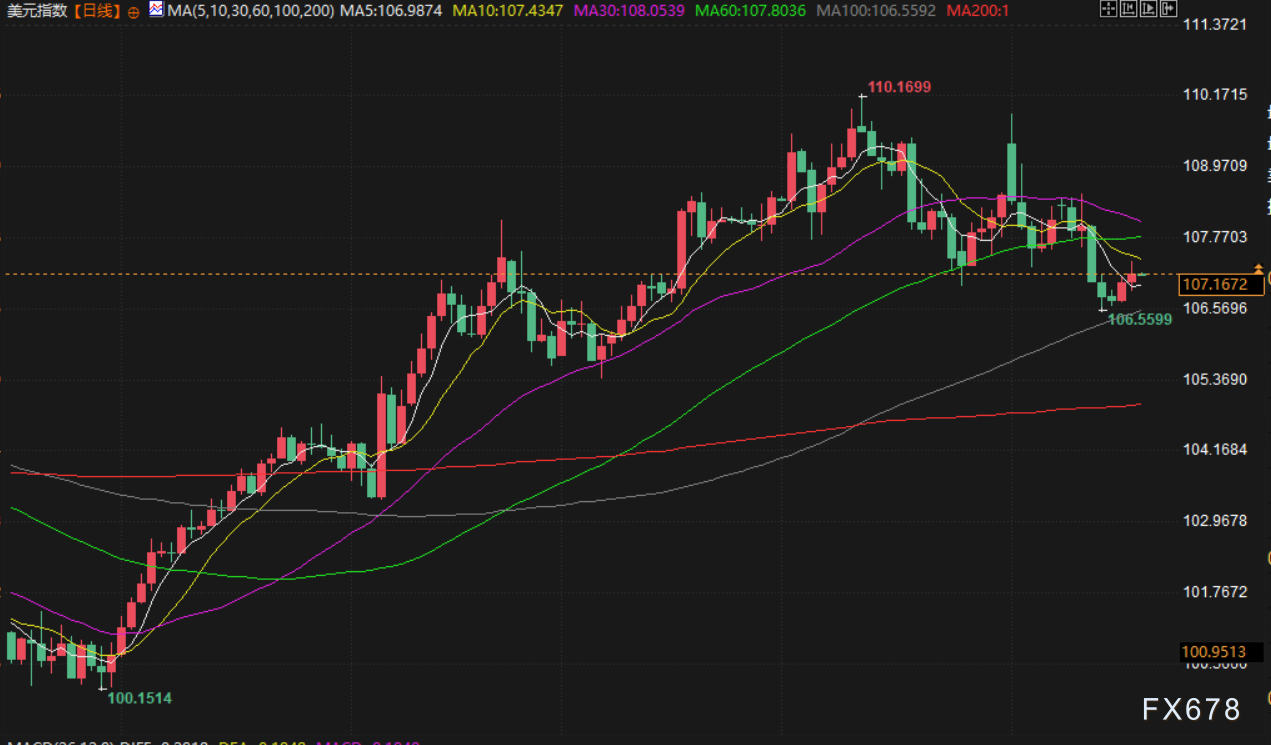
In afternoon trading, the US dollar fell 0.4% against the Japanese yen to 151.495, and the euro fell 0.6% against the Japanese yen to 157.925 yen. The data released earlier showed that due to the impact of blizzards and severe cold weather, the seasonally adjusted annual rate of single family housing construction in the United States in January was 993000 units, a year-on-year decrease of 8.4%. Subsequently, the US dollar continued to decline against the Japanese yen. At the same time, the euro fell 0.2% against the US dollar to $1.0424. The US dollar index closed at 107.18, up 0.2%, after falling 1.2% last week.
At the same time, the pound received a brief boost due to higher than expected UK inflation rates, with the UK inflation rate rising more than expected, reaching a 10 month high of 3% in January and possibly further rising. The pound hit a two month high overnight, but its latest price was $1.2585, down 0.2%.
The Trump administration announced on Tuesday that it agreed to hold further talks with Russia on ending the war in Ukraine, following the first meeting between the US and Russia without Ukraine's participation. This is in stark contrast to Washington's previous practice of uniting US allies and isolating Russian President Putin.
On Wednesday, Ukrainian President Zelensky and Trump accused each other. The euro has had the strongest news response to Russia and Ukraine, rising sharply last week due to the possibility of a resolution to the conflict, but falling again due to signs of tension.
City Index and FOREX.com market analyst Fawad Razaqzada wrote in a research report, "If Russia and Ukraine ultimately reach a peace agreement, the US dollar is likely to face new pressure
On Wednesday, as widely expected by the market, the Reserve Bank of New Zealand lowered its benchmark interest rate by 50 basis points to 3.75% and hinted that future rate cuts may be smaller, causing the New Zealand dollar to rise 0.3% against the US dollar to $0.5721.
international news
Federal Reserve Messenger: Federal Reserve Officials Consider Slowing or Suspending Balance Sheet Shrinking
Nick Timiraos, the spokesperson for the Federal Reserve, stated that the minutes of the Fed's January meeting showed that officials discussed at last month's meeting whether to slow down or pause the reduction of its nearly $6.8 trillion asset portfolio, as they face complex issues arising from raising the federal debt ceiling in the coming months. The dynamics related to the debt ceiling may lead to significant fluctuations in the Federal Reserve's liabilities. The process of shrinking the balance sheet will ultimately deplete the reserves of the banking system, and Federal Reserve officials are unsure how long this process will last. How the Ministry of Finance will manage the currency market fluctuations caused by its cash balance may complicate the Federal Reserve's ability to determine the correct reserve balance. Therefore, according to the meeting minutes released on Wednesday, officials believed at the January meeting that it may be appropriate to consider suspending or slowing down the reduction of the balance sheet until the debt ceiling issue is resolved.
Federal Reserve meeting minutes: Hope to see further progress on inflation before interest rate cuts
The minutes of the Federal Reserve meeting show that the Fed hopes to see "further progress on inflation" before deciding to cut interest rates again. The Federal Reserve, citing rising inflationary pressures, stabilized interest rates in the range of 4.25% -4.5% at its last meeting, and the market expects no rate cuts at the March meeting. According to the minutes of the meeting, the committee unanimously agreed that "the Federal Reserve has ample time to assess the changing prospects of economic activity, labor markets, and inflation. Many economists and market strategists are concerned that tariffs and stricter immigration policies may increase inflationary pressures, potentially offsetting the positive effects of reduced taxes and relaxed regulations. The Federal Reserve has previously stated that it is not in a hurry to further cut interest rates due to persistently high inflation. Inflation has fallen from post pandemic highs, but remains stubbornly above the ideal level of the Federal Reserve. For example, the consumer price index in January increased by 3% year-on-year, the fastest pace in seven months and higher than the Federal Reserve's target of 2%.
Affected by US sanctions, Cuba faces shortage of high-grade gasoline
On February 19th local time, Irenaldo Perez, Deputy Director of the National Oil Company of Cuba, and Ernesto Martinez, First Vice President of CIMEX, stated in an interview with local media that there is a shortage of high-grade gasoline in Cuba due to the problems with gasoline imports caused by the sanctions imposed by the Trump administration and the limited fuel production capacity in the country. It is reported that Cuba will take a series of new measures to address this issue.
Trump intervenes in the budget dispute between the two houses and supports the House Republican's $4.5 trillion tax cut plan
US President Donald Trump has expressed support for the House's plan to cut taxes by $4.5 trillion, pouring cold water on the Senate Republicans' eagerness to approve funding to help them crack down on immigration, indicating that they do not favor large-scale bills that may take months of bargaining to reach an agreement. As the crucial congressional vote approaches, Trump posted on social media on Wednesday, intervening in the ongoing budget dispute between Republicans in the House and Senate. The Senate had originally planned to vote on a budget proposal this week. The budget will increase military spending by $150 billion and immigration and border enforcement spending by $175 billion. Senate Republicans have stated that they tend to take swift action on these priorities and are not in a hurry to resolve core controversies such as tax cuts and raising the debt ceiling. However, Trump has expressed support for a more comprehensive budget plan in the House of Representatives, which has sparked conflicts within the Republican Party over issues such as reducing federal spending and the size of tax cuts.
Peskov: Russia and the United States agree to immediately begin substantive preparations for the meeting between the leaders of the two countries
On February 19th local time, Russian Presidential Press Secretary Peskov stated in a media interview that Russia and the United States have agreed to immediately begin concrete and substantive preparations for the meeting between Putin and Trump. It is currently uncertain how many days or weeks the preparation time for Putin's meeting with Trump will take. (CCTV)
The Saudi Sovereign Fund Summit has attracted a group of financial and technology industry leaders to support it
US President Trump plans to make an appearance in Miami Beach on Wednesday, giving a speech to financial and technology industry leaders, as well as the event organizer - Saudi Arabia's massive sovereign wealth fund. For investors hoping to please the $925 billion asset gatekeepers, this conference organized by the Public Investment Fund (PIF) provides a great opportunity. However, this is the first time in history that a US president has personally taken the stage. Saudi Crown Prince Mohammed bin Salman has promised Trump that this oil-rich country is willing to increase its investment and trade with the United States by $600 billion over the next four years.
Affected by severe weather and tariff concerns, the construction of single family homes in the United States significantly decreased in January
Affected by blizzards and low temperatures, the construction of single family homes in the United States experienced a significant decline in January, and the rebound may be limited by rising import tariff costs and rising mortgage interest rates. The data shows that the construction of single family residential units last month, after seasonal adjustment, was 993000 units, a decrease of 8.4%. The December data was revised up to 1.084 million units, higher than the previously reported 1.05 million households. Although residential construction is still supported by a shortage of second-hand housing supply, the protectionist trade policies implemented by the Trump administration may make it difficult for builders to initiate new housing projects. The survey shows that due to 32% of household appliances and 30% of cork wood relying on international trade, the uncertainty of tariff size and scope has made builders more concerned about costs. Mortgage loan interest rates also bring pressure. The average interest rate for a 30-year fixed rate mortgage loan hovers below 7%.
Ukrainian President: The draft rare earth ore agreement proposed by the US does not mention providing security guarantees for Ukraine
On February 19th local time, Ukrainian President Zelensky stated that he is ready to publicly release the draft rare earth mining agreement proposed by the US Treasury Secretary during his visit to Ukraine, and pointed out that the draft document so far is "unclear" and does not mention providing security guarantees for Ukraine. On February 14th local time, the Ukrainian delegation attending the Munich Security Conference revealed that Ukraine has completed the evaluation of the draft document of the US Ukraine cooperation agreement brought by US Treasury Secretary Bessent during his visit to Kiev, and has submitted the revised document to the US side. On the 16th, Zelensky stated on social media that he stated in a media interview that the rare earth mining agreement reached with the United States should include security guarantees for Ukraine. (CCTV)
Europe considers to use the unused COVID-19 recovery fund of 93 billion euros for national defense
Europe is considering transferring the unspent 93 billion euro COVID-19 recovery fund to the defense sector as part of efforts to increase defense investment and military spending. Previously, Trump warned that the United States may withdraw security support from Europe. According to four people familiar with the matter, European Commission President von der Leyen mentioned this financing option at a meeting on Tuesday. It is estimated that the EU's additional financing needs for defense in the next 10 years will be around 500 billion euros. Von der Leyen said that the EU may also change the use of regional development funds, and mentioned that "European co financing" is another option being explored.
Domestic news
Attracting 260 domestic and foreign institutions worldwide, these three international proficiency testing programs have been successfully implemented and completed
The State Administration for Market Regulation (SAMR) has recently successfully implemented three international testing and inspection agency capacity verification plans in the fields of mineral resources, energy, and water quality. This capability verification plan is an important practice of the General Administration of Market Supervision (Certification and Accreditation Administration of the People's Republic of China) in deepening the basic cooperation in quality and technology of the "the Belt and Road" initiative. Related projects focus on the core concerns of the "the Belt and Road" co construction countries in resource development, energy cooperation and environmental protection, and specifically set up three projects, namely, "determination of gold and silver content in ores", "coal industry analysis (ash, volatile, total sulfur)" and "determination of antimony and nitrate in water", covering seven key detection parameters. Systematically analyze the technical differences between domestic and foreign laboratories through unified testing samples, standardized testing processes, multidimensional data comparison, and authoritative result evaluation. This capability verification plan not only helps institutions accurately locate technical weaknesses and optimize detection methods, but also significantly enhances mutual trust and recognition of international inspection and detection data, providing a solid technical guarantee for the "the Belt and Road" cross-border trade. It is reported that the three plans have attracted a total of 260 inspection and testing institutions from home and abroad around the world to apply for participation. Among them, the overseas laboratories cover 18 "the Belt and Road" co construction countries, including Saudi Arabia, Russia, Australia, and so on, injecting new energy into regional sustainable development and international trade mutual recognition. The results showed that 195 institutions received "satisfactory results" with an overall pass rate of 75%. (CCTV)