
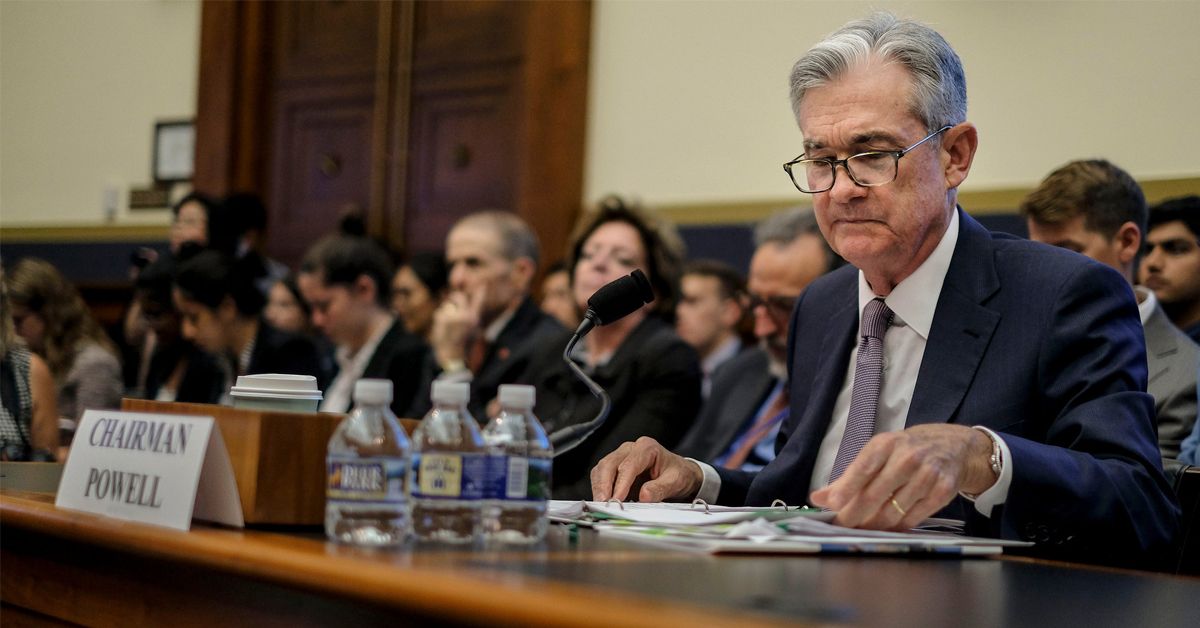
On September 18th, the Federal Reserve announced a rate cut, marking the first time since March 2020. This move has raised concerns in the market about the health of the US economy, the future policy direction of the Federal Reserve, and the impact on traders.
The official statement of the Federal Reserve states that its goal is to "maintain a strong labor market" and control inflation at 2%. However, Chairman Powell's contradictory statements and aggressive interest rate cuts seem to indicate that the Federal Reserve is concerned about some deeper issues that have not yet been made public.
Despite Powell's claims of "stable labor market conditions" and "good economic conditions in the United States," he cited deteriorating labor market data to defend interest rate cuts. The revised employment data shows that the growth rate of employment in the past year has been slower than previously reported, with an estimated reduction of 88000 jobs. At the same time, the unemployment rate has also increased - a combination that usually indicates the approach of an economic recession.
The intervention of political factors has made the situation even more confusing. Senator Elizabeth Warren and other Democrats have publicly urged the Federal Reserve to cut interest rates by 75 basis points, arguing that delaying the cuts has "endangered the economy". This unusual political pressure on the independent decision-making power of the Federal Reserve implies that someone is trying to shift the blame for a potential economic recession in advance. Former President Donald Trump criticized the interest rate cuts as a sign of economic weakness under the current administration and accused the Federal Reserve of "manipulating politics".
There may be multiple reasons behind the Federal Reserve's decisive interest rate cut, including:
The slowdown in employment growth and the rise in unemployment rate indicate that the weakness of the US economy may be more severe than surface data suggests. The Federal Reserve may be taking preventive measures to stimulate economic activity and avoid a recession.
If the inflation rate drops to 2.5% or even lower, there is a risk of deflation, which may lead to a decrease in consumer spending and business investment. Interest rate cuts may be aimed at preventing the economy from falling into a vicious cycle of deflation.
International trade frictions, geopolitical uncertainty, and slowing growth in major economies may all have a negative impact on the US economy. The Federal Reserve may lower interest rates to cushion the impact of these external shocks.
The high debt of enterprises and imbalances in other financial sectors also bring risks. Lowering interest rates can reduce a company's debt repayment costs, thereby lowering the risk of debt default and maintaining the stability of the financial system.
The market reacted cautiously to this. Although a low interest rate environment helps to reduce borrowing costs, encourage investment, and thus benefit the stock market, the magnitude of this interest rate cut has led some investors to question whether the Federal Reserve truly has confidence in the economic outlook. If the US central bank's move is in response to some undisclosed signs of economic weakness, then current asset prices may not fully reflect potential risks.
Traders should maintain strategic vigilance towards the current environment in the following areas:
Carefully evaluate the risk exposure of industries in the investment portfolio that are sensitive to economic downturns, such as manufacturing, energy, and finance. Consider reallocating funds to more defensive industries such as healthcare and essential consumer goods.
Interest rate cuts usually lead to a weakening of the US dollar, which will have an impact on international trade and investment portfolios. Companies with significant overseas income may benefit from exchange gains, while companies that rely on imports may face the risk of rising costs.
Pay close attention to the upcoming key economic data, such as GDP growth rate, consumer confidence index, and subsequent revisions of employment data. These data will provide important reference for understanding the true direction of the economy.
Attention should be paid to the different impacts of a long-term low interest rate environment on different asset classes. Bank net interest margins may face pressure to narrow, while real estate and utility companies may benefit from lower financing costs.
The Federal Reserve's interest rate cut this time exceeded expectations, suggesting that the official statement may not have fully captured the real economic situation. Many economists and journalists have been emphasizing that the foundation of the US economy is not stable. At least the Federal Reserve seems to have finally decided to address some of the issues.
Traders who are able to interpret hidden meanings and consider potential hidden motives will be better equipped to navigate complex market environments. If this policy shift triggers an economic recession, all markets will be affected. Market volatility will rapidly intensify, and traders who accurately predict economic trends will receive unprecedented returns. Traders who blindly trust official information may end up in a dead end.
In the coming weeks, please maintain critical thinking, explore news sources from different regions, and compare various observations. The last economic recession created countless millionaires, but also left some people penniless, so it is important to conduct careful research and analysis, and delve into any potential issues that have not been mentioned.
