**********The global crude oil market experienced a significant drop on Wednesday, the largest in two months, mainly due to the US PresidenttrumpDue to the impact of promoting the Russia Ukraine peace talks, US crude oil continued to decline during the Asian trading session on Thursday, with a current price of $70.75 per barrel.
Trump said on social media that he had talked with Russian President Putin and Ukrainian President Zelensky, and planned to go to Saudi Arabia for talks in the "near future" to promote the settlement of the Russia-Ukraine conflict. The market generally believes that this may mean a reduction in the risk of Russian crude oil supply, thereby weakening the price premium previously caused by geopolitical tensions.
Trump's negotiations, I believe, have led to a decrease in the current risk premium of oil prices. "- Phil Flynn, Senior Analyst at Price Futures Group
Against the backdrop of Trump's push for peace talks, global market expectations of a possible recovery in Russian crude oil supply have risen, leading to a decline in oil prices.

The Federal Reserve slows down expectations of interest rate cuts, and market sentiment shifts towards caution
In addition to geopolitical influences, the monetary policy of the Federal Reserve has also been an important factor in the recent decline in oil prices. On Tuesday, Federal Reserve Chairman Powell stated that the US economy remains robust and there is currently no rush to further cut interest rates. However, if inflation declines or the job market weakens, the Federal Reserve will be prepared to take action.
The economic situation is good, and the Federal Reserve is not in a hurry to further cut interest rates, but we will closely monitor changes in inflation and the job market. "- Federal Reserve Chairman Powell
The market had previously bet that the Federal Reserve would accelerate the pace of interest rate cuts within 2024 to stimulate economic growth. However, the latest Consumer Price Index (CPI) for January exceeded market expectations, indicating that inflationary pressures still exist, leading toFederal Reserve PolicyThe prospects have become more complex. This signal has prompted investors to turn to safe haven assets, weakening the overall risk appetite of the commodity market.
US crude oil inventories surge, far exceeding market expectations
The latest data released by the US Energy Information Administration (EIA) on Wednesday showed that crude oil inventories increased by 4.1 million barrels in the week ending February 9th, with analysts previously expecting an increase of 3 million barrels. This data indicates that the supply of crude oil in the United States far exceeds market demand, further exacerbating concerns about short-term supply-demand imbalances.
In addition, although gasoline inventories in the United States decreased by 3 million barrels, indicating some demand resilience, distillate inventories including diesel and heating oil increased by 100000 barrels to 128.48 million barrels, previously expected to decrease by about 1.5 million barrels, suggesting that industrial and transportation fuel demand may weaken.
The unexpected increase in US crude oil inventories, coupled with the policy movements of the Federal Reserve, creates significant uncertainty in market demand in the short term. "- Market analyst John Kilduff
The release of this inventory data has intensified market concerns about short-term supply-demand imbalances, further accelerating the downward trend of oil prices.
OPEC maintains demand forecast, supported by growing demand from major Asian countries
OPEC stated in its latest monthly report that global oil demand will continue to steadily increase in the coming years. The global oil demand is expected to increase by 1.45 million barrels per day in 2025 and 1.43 million barrels per day in 2026, which is consistent with last month's forecast.
The market is affected by inventory and economic uncertainty in the short term, but in the long run, energy demand from major Asian countries will still be an important factor supporting oil prices. "- OPEC analysis report
Editor's viewpoint: Short term oil price fluctuations and adjustments, long-term support factors still exist
From the current market situation, oil prices may continue to fluctuate and adjust in the short term due to geopolitical easing, changes in Federal Reserve policies, and inventory growth. Trump's push for Russia Ukraine peace talks has led to market expectations of a decrease in the risk of Russian crude oil supply, resulting in a short-term drop in oil prices. At the same time, the Federal Reserve's monetary policy attitude tends to be cautious, further suppressing the market's risk appetite.
However, in the long run, the demand growth forecast maintained by OPEC and the energy demand growth of major Asian countries remain the main supporting factors for oil prices. If the global economy maintains stable growth, the crude oil market is expected to resume an upward trend in the medium to long term. Therefore, although short-term market sentiment is suppressed by multiple factors, investors still need to pay attention to the global economic recovery and further changes in the supply side to evaluate the long-term trend of oil prices.
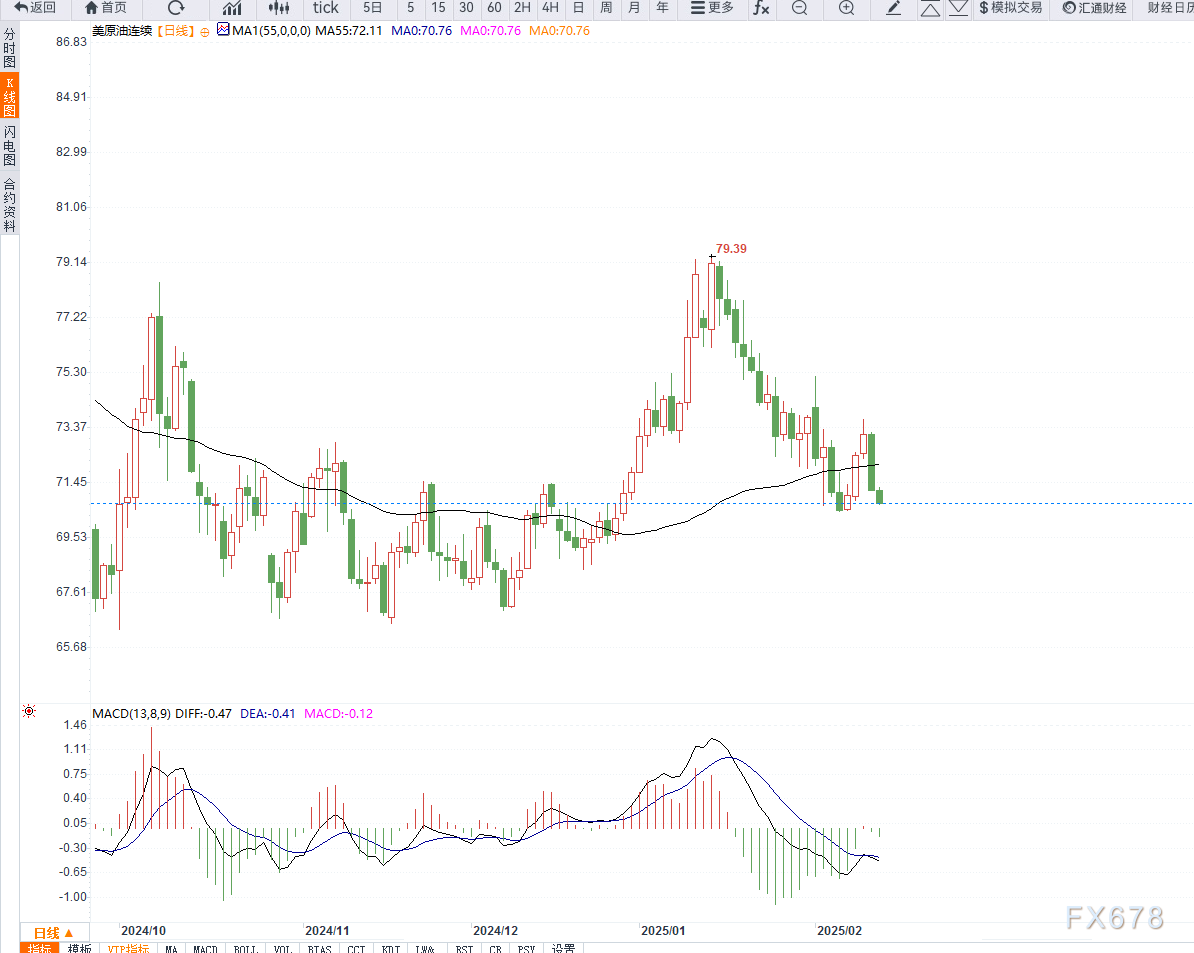
At 10:35 Beijing time, US crude oil is currently reported at $70.77 per barrel.